
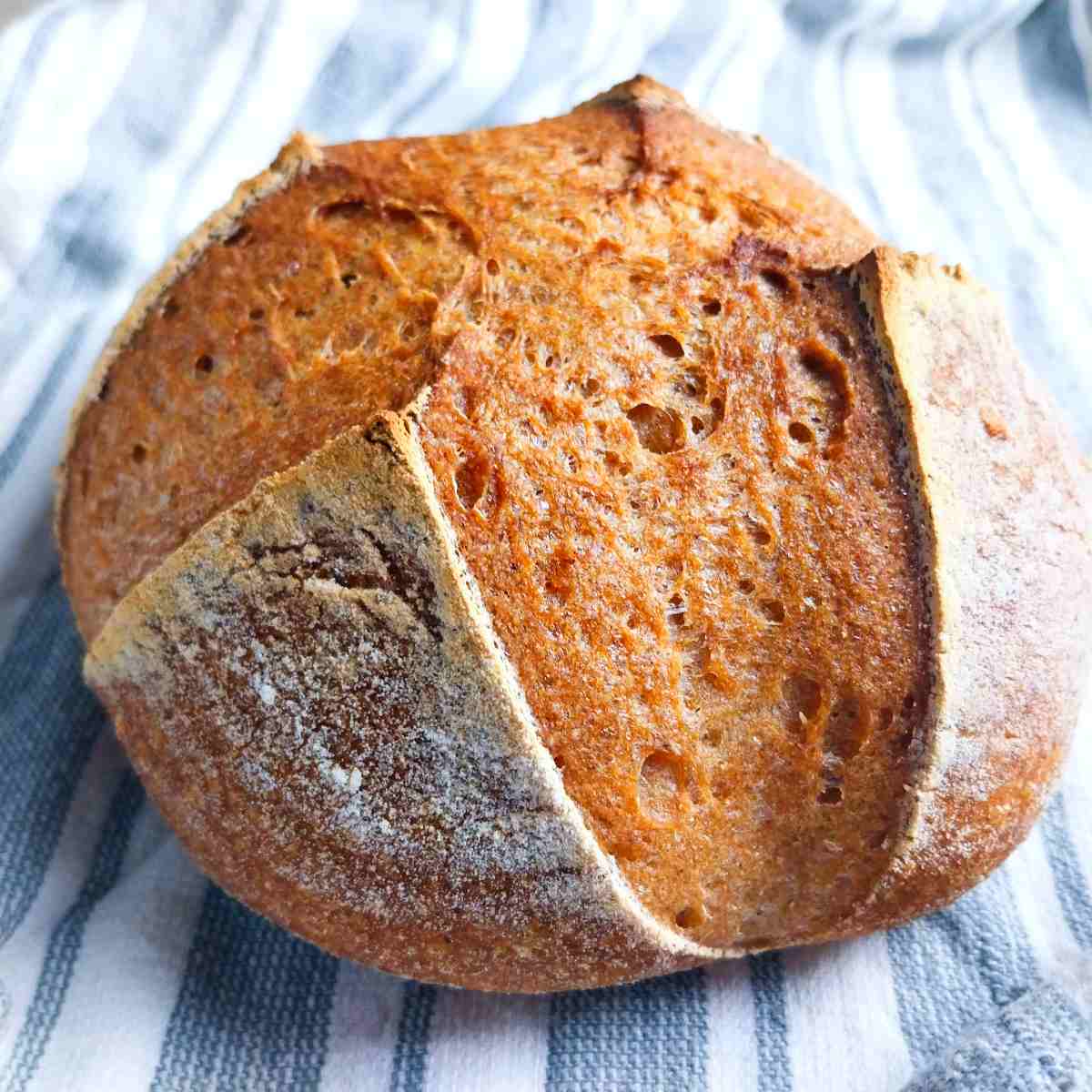
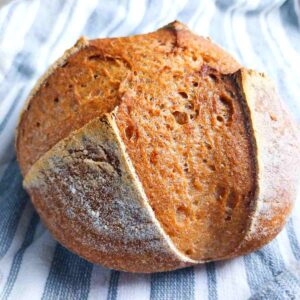
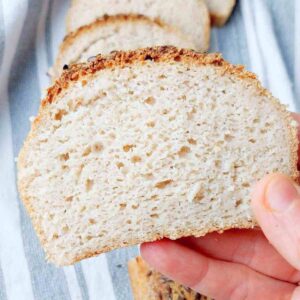
This vegan gluten-free sourdough bread is soft, fluffy, nutritious, and perfectly crusty! Once you master the skill, you will never go back to the store-bought gluten-free bread.
Jump to:
- Sourdough vs. Commercial Yeast
- Gluten-Free Starter
- Psyllium Husk
- Sourdough Terminology Explained
- 🍽 Tools You Might Need
- The Best Flour for GF Sourdough
- A note on flour types
- 🥘 Ingredients
- 📖 Substitutes
- 🔪 Step-by-step instructions
- Troubleshooting
- Frequently Asked Questions
- More Gluten-Free Sourdough Recipes to Try
- Get my GF sourdough recipes eBook
- Gluten Free Vegan Sourdough Bread
- 💬 Community
Sourdough vs. Commercial Yeast
Sourdough bread uses naturally grown yeast with wild bacteria that is naturally found in the air around us and in water and flour used to make a starter.
Commercial yeast is a single strain of bacteria created in a lab to speed up the fermentation process.
While commercial yeast is easier to use, sourdough will provide a unique flavor, more nutrients, and an authentic experience of artisan bread baking.
New to gluten-free sourdough? Watch my 16-minute video tutorial for beginners!
Gluten-Free Starter
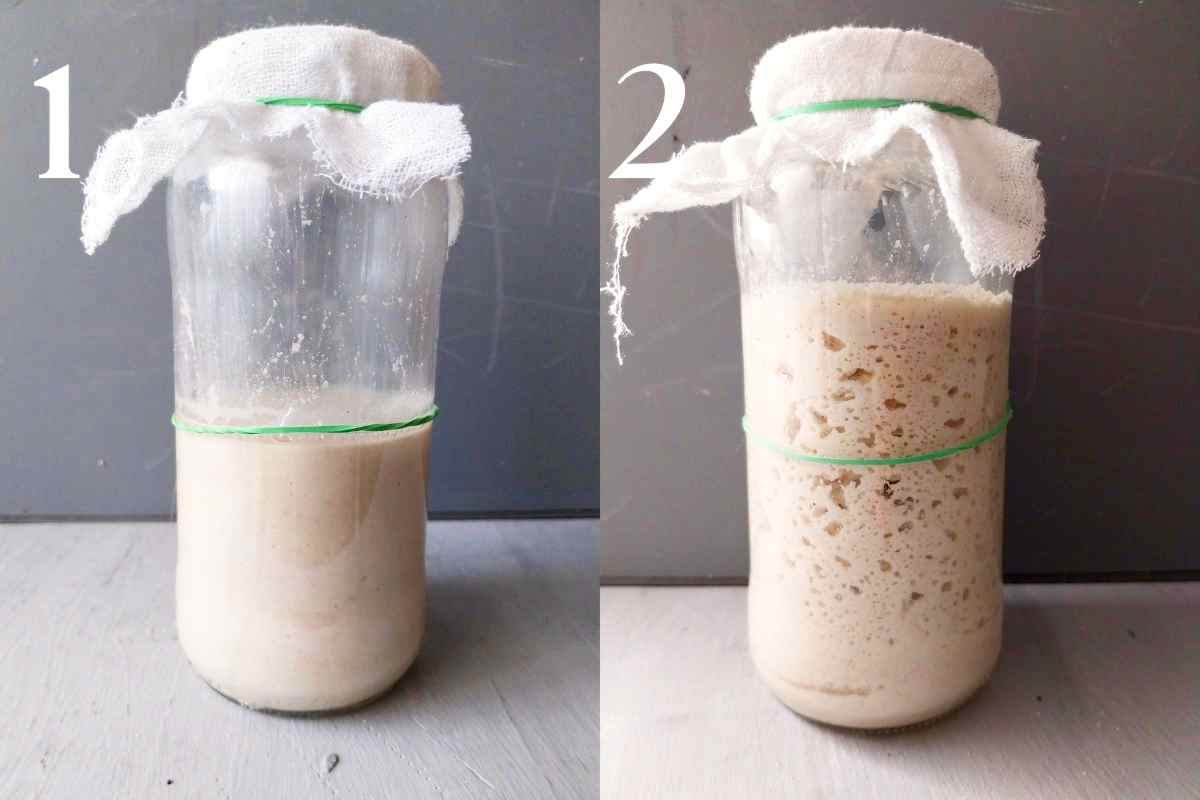
You will need an active starter for this recipe, if you don't have a starter yet, make sure to read my minimal waste starter guide.
You can use any starter you have, I personally find sorghum flour starter and brown rice starter work best, but you can experiment with other types (like millet) as well.
Psyllium Husk
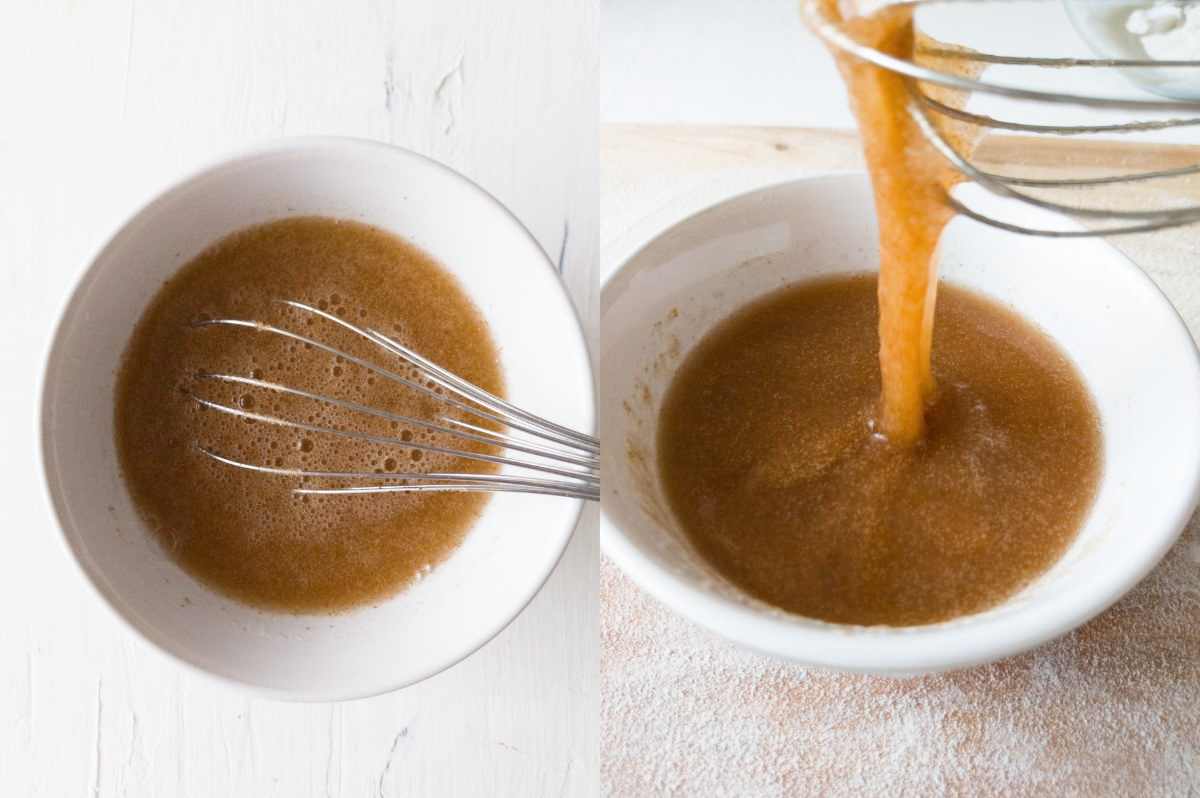
While some recipes use xanthan gum, I prefer using psyllium husk as a binder in gluten-free sourdough bread. I wrote more on this wonderful ingredient in my psyllium 101 article!
If you can't have psyllium, you might be able to use Konjac instead, although it makes the dough more crumbly, less shapable, and less stable.
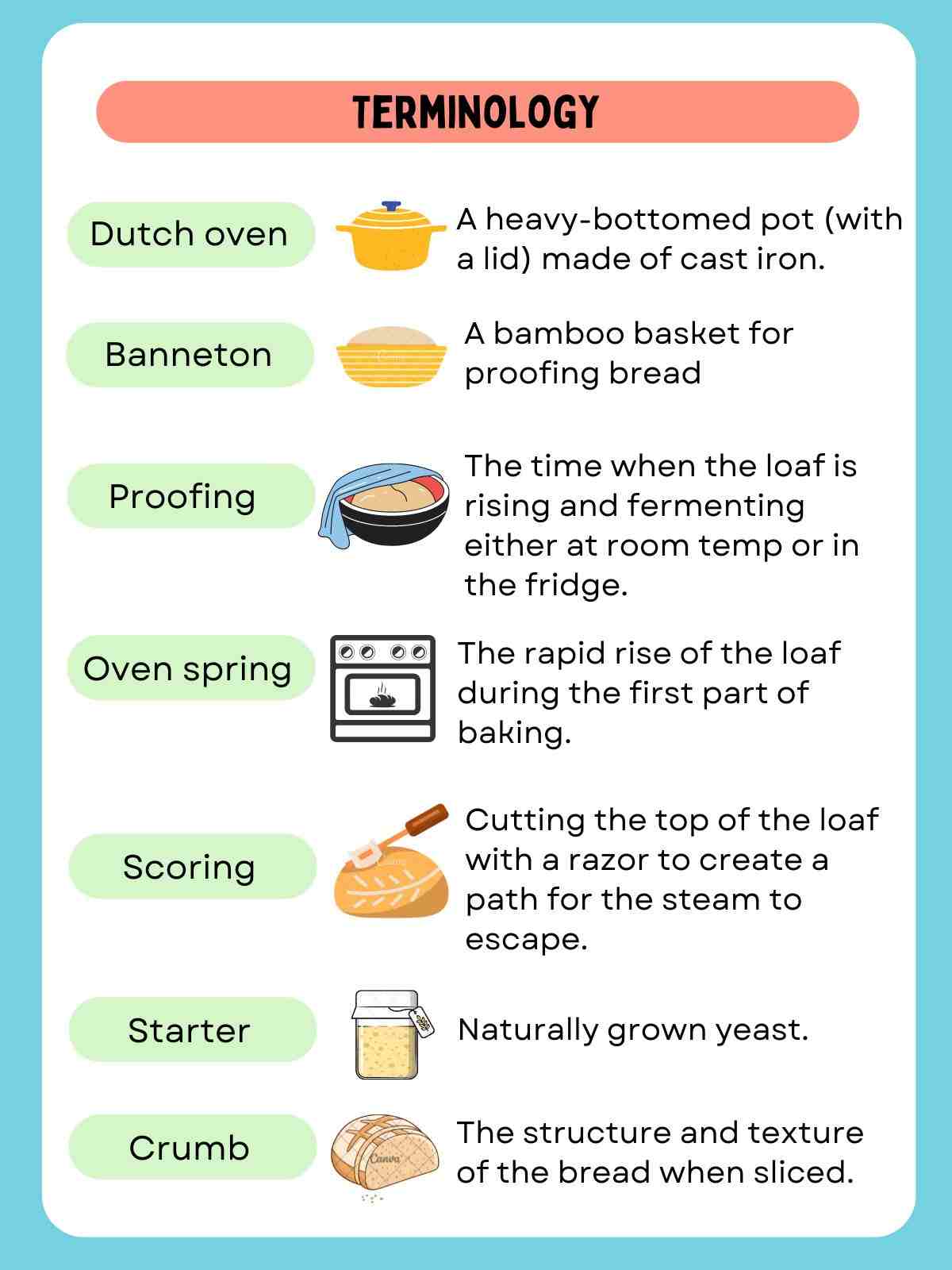
Sourdough Terminology Explained
🍽 Tools You Might Need
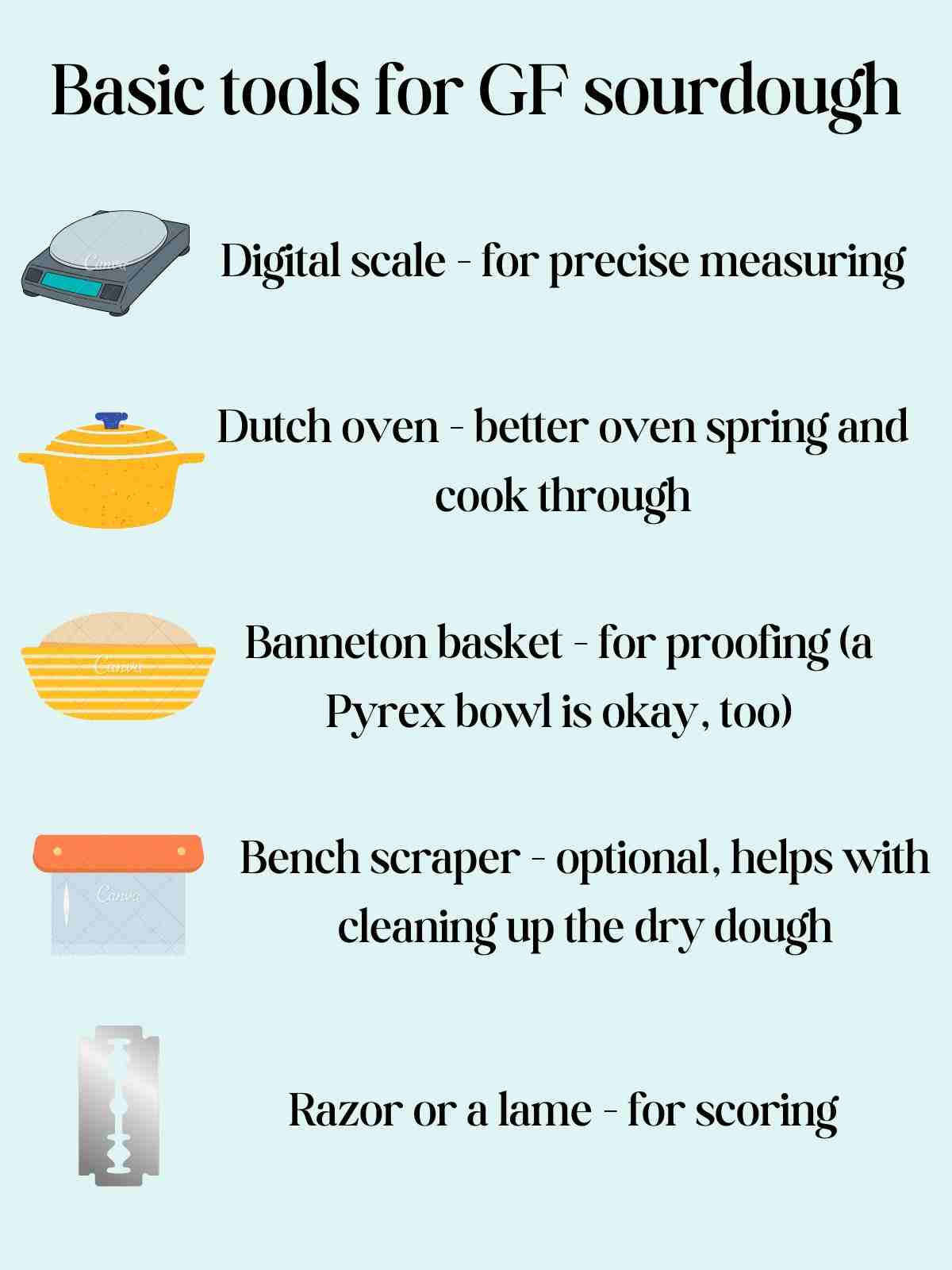
- A Dutch oven. You can also use a cast iron pan/baking sheet with a dish filled with water at the bottom to create extra steam during baking.
- A digital kitchen scale. I don't provide the cup measurements because it is so important for gluten-free sourdough to be measured by weight and not by volume!
- A banneton basket allows for a pretty pattern and better breathing of the dough. You can use a mixing bowl lined with a kitchen towel instead if you need to!
- A bench scraper. This tool is amazing when it comes to cleaning up the doughy mess off of the kitchen counter!
The Best Flour for GF Sourdough
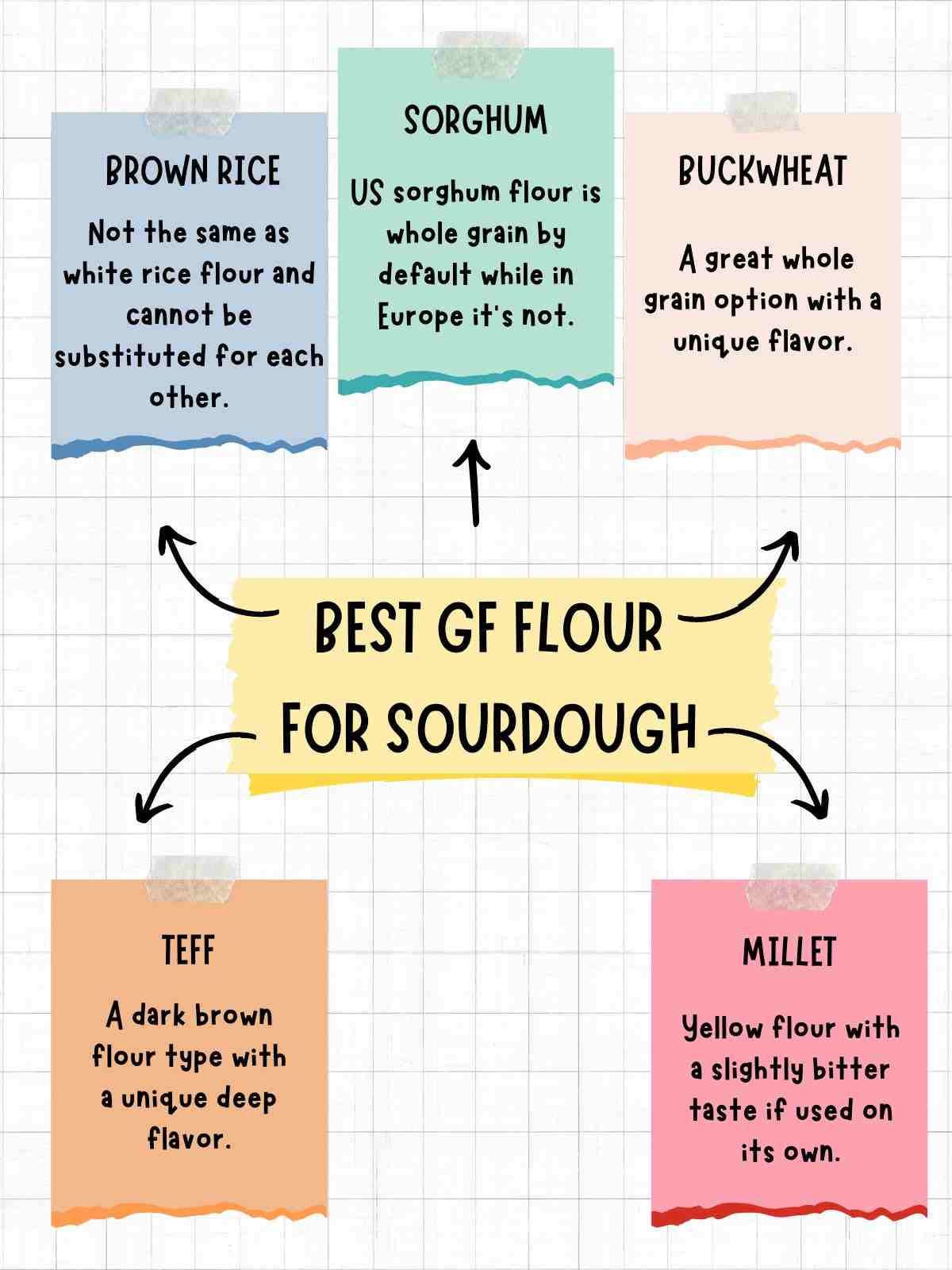
Almond and coconut flours are not the best for making sourdough bread because of their low carb content. You can, however, add some starter to my almond bread recipe if you need a keto sourdough recipe!
A note on flour types
It is important to add starches like potato, corn, tapioca, or arrowroot to the dough for a fluffier crumb. If you can't have starches, check out my 100% millet, 100% sorghum, and 100% brown rice flour sourdough recipes.
🥘 Ingredients
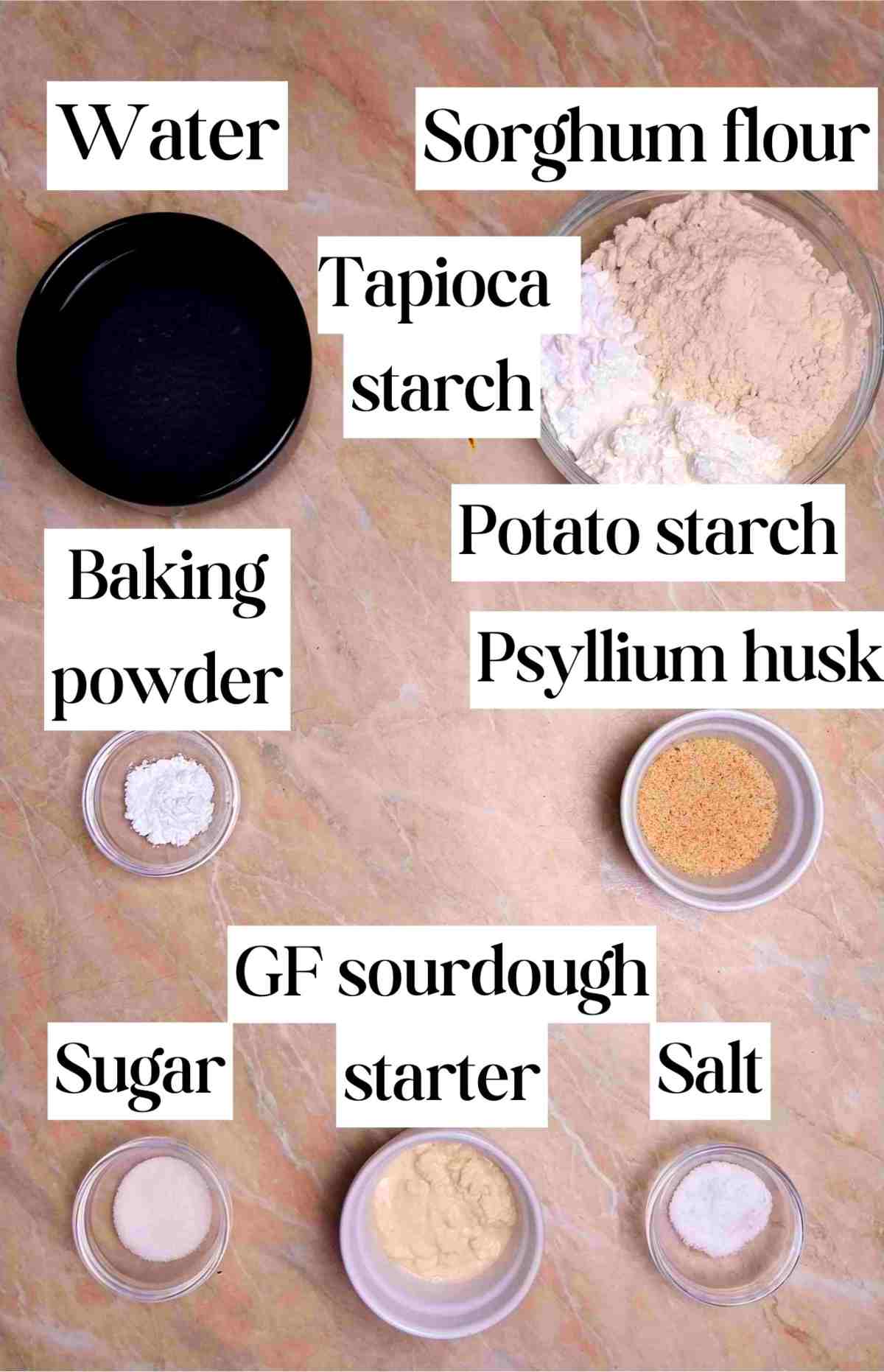
Gluten-free sourdough starter - use a mature starter that is at its peak activity, meaning when it is at its highest point of rising. Check out my gluten-free sourdough starter recipe if you don't have one!
Psyllium husk - you can use whole husks or powder. I prefer baking with whole husks as they are very easy to handle. But if you only have powder, then try avoiding very fine powder and opting for the coarser variety instead. For more information refer to my article about psyllium husk in baking.
Water - use room temperature water for the best results. I use tap water with no problems but if your tap water has chlorine in it, you will need to use filtered or bottled water.
Sorghum flour - European brands tend to be lighter than the US ones. You can use either sorghum flour, the results will be the same!
Starches - tapioca starch adds softness and chewiness to the texture while potato starch adds lightness to the loaf.
Baking powder - optional, but it helps raise the loaf and get more air in the bread.
Sugar - it is used for bacteria to feed on.
📖 Substitutes
Flour - feel free to experiment with other flour types keeping in mind that some of them might need more water than others!
Psyllium husk - I don't recommend substituting psyllium husk. You can use psyllium powder instead but keep in mind it might clump and/or turn your bread purple.
Sugar - use the same amount of maple syrup or honey in place of sugar.
🔪 Step-by-step instructions
Step 1
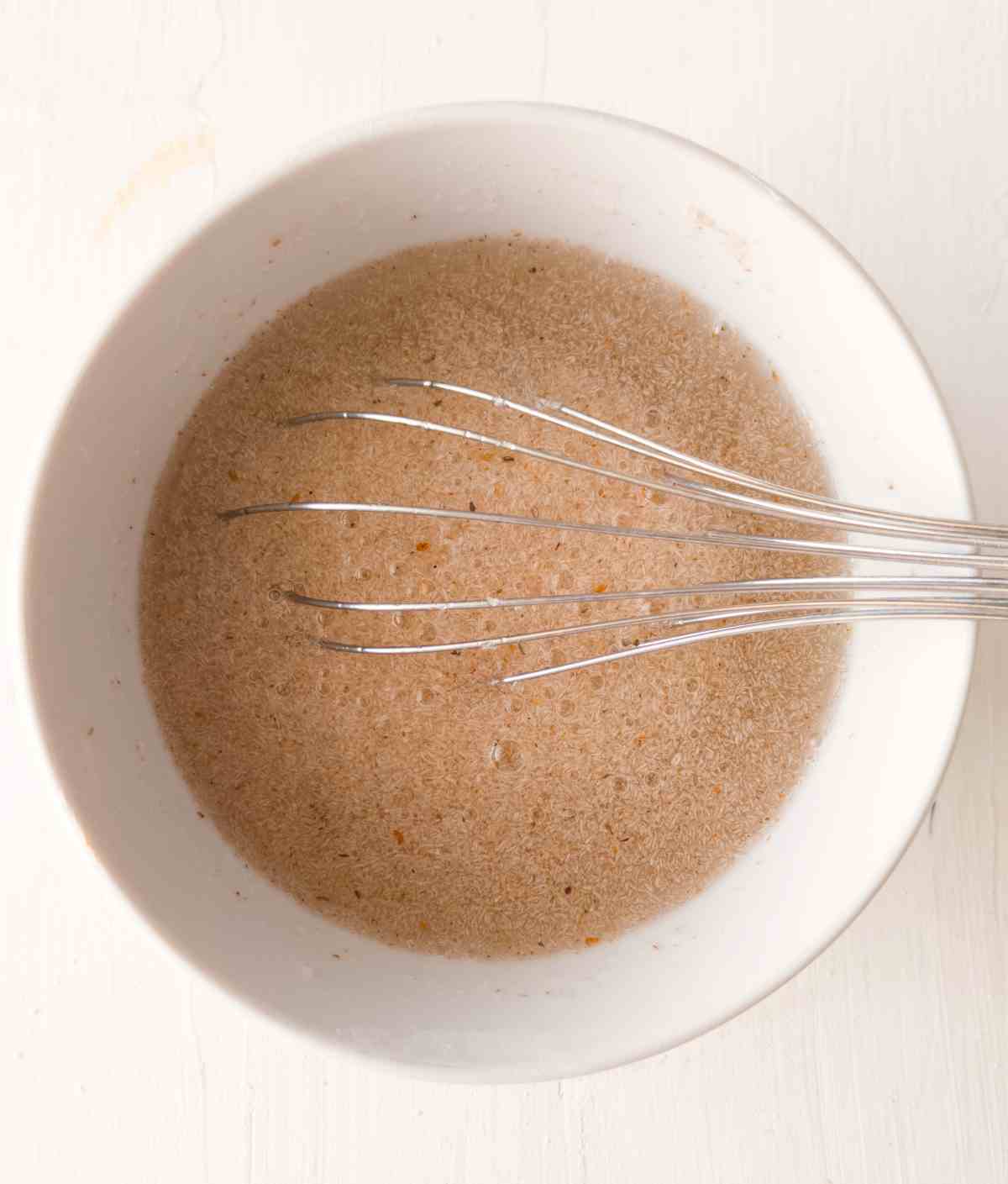
Combine psyllium husk, sugar, and room temperature/warm water in a medium-sized bowl, whisk to incorporate, and set aside.
Step 2
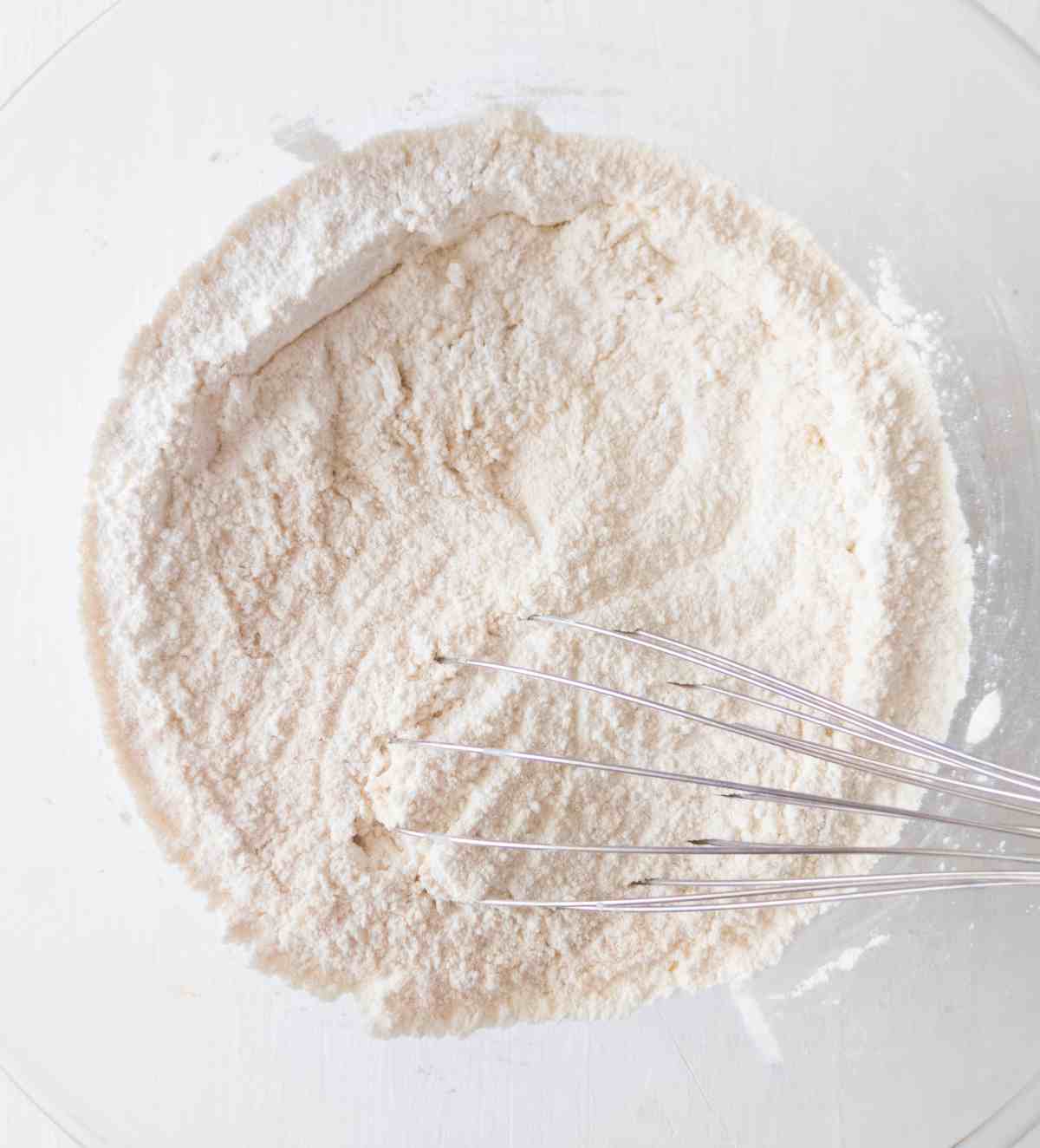
In a large mixing bowl combine all the dry ingredients (sorghum flour, starches, baking powder, and salt) and whisk to incorporate.
Step 3
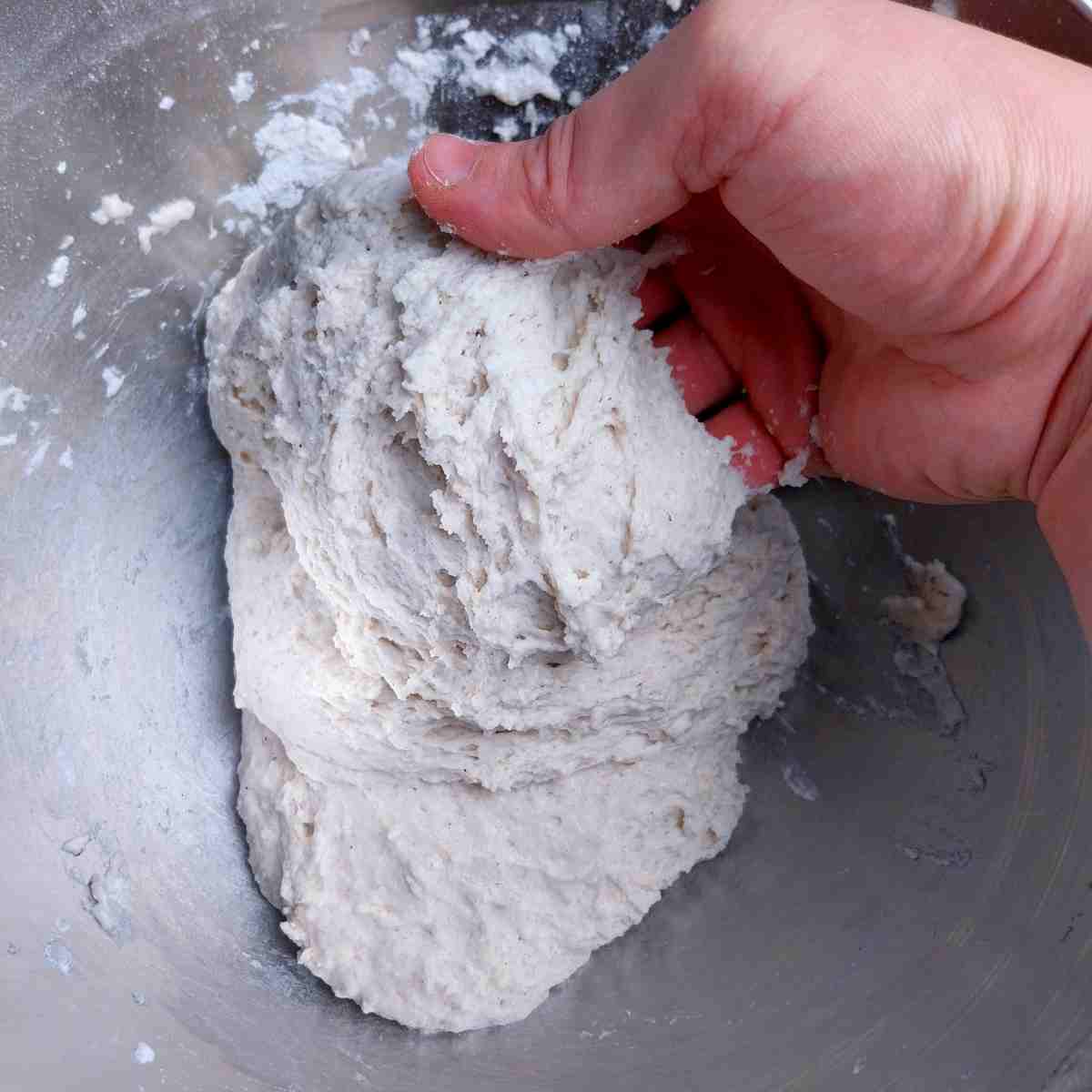
Once psyllium forms a gel, add it to the bowl with the dry ingredients.
Add mature gluten-free sourdough starter to the bowl and mix the dough thoroughly.
I like to use an electric mixer for this step but you can also do it by hand if you prefer.
Step 4
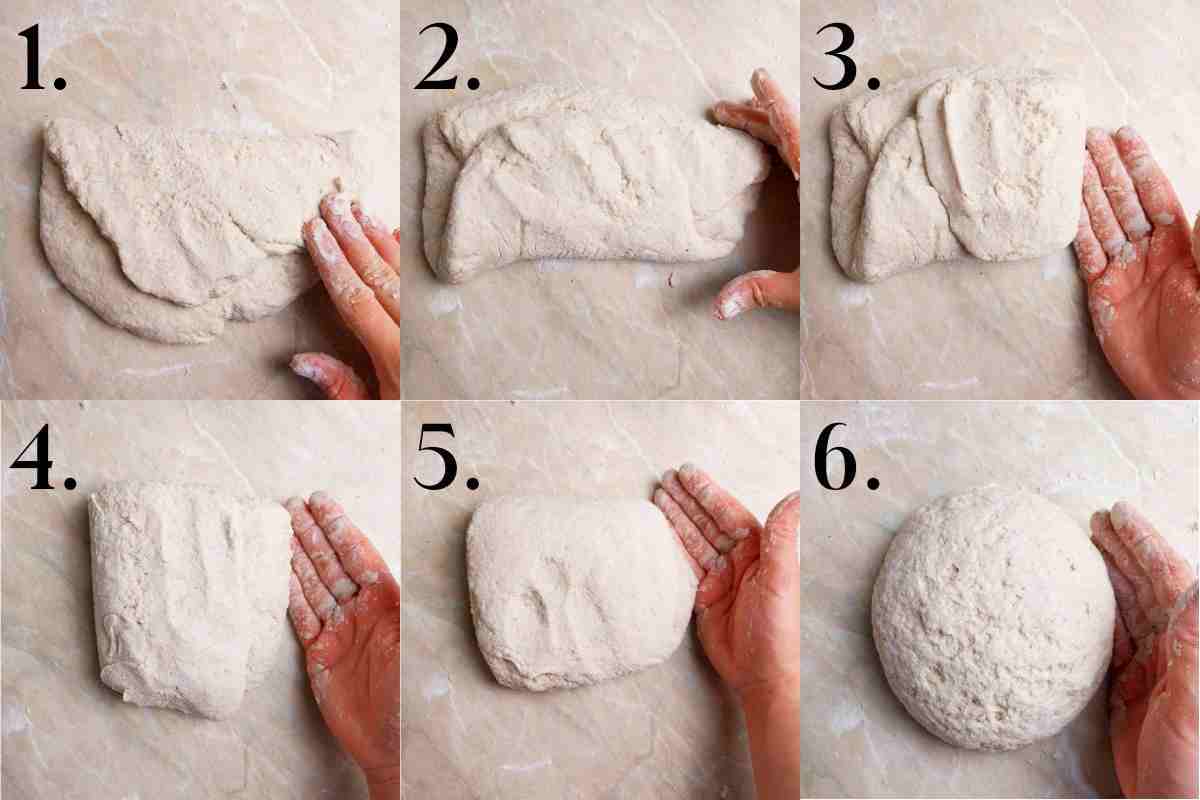
Once the dough is well incorporated, turn it over onto a lightly floured working surface and flatten it into a disc.
Fold each side of the disc onto its middle, flip the dough, and shape it into a ball (refer to the pictures for visual instructions).
Step 5
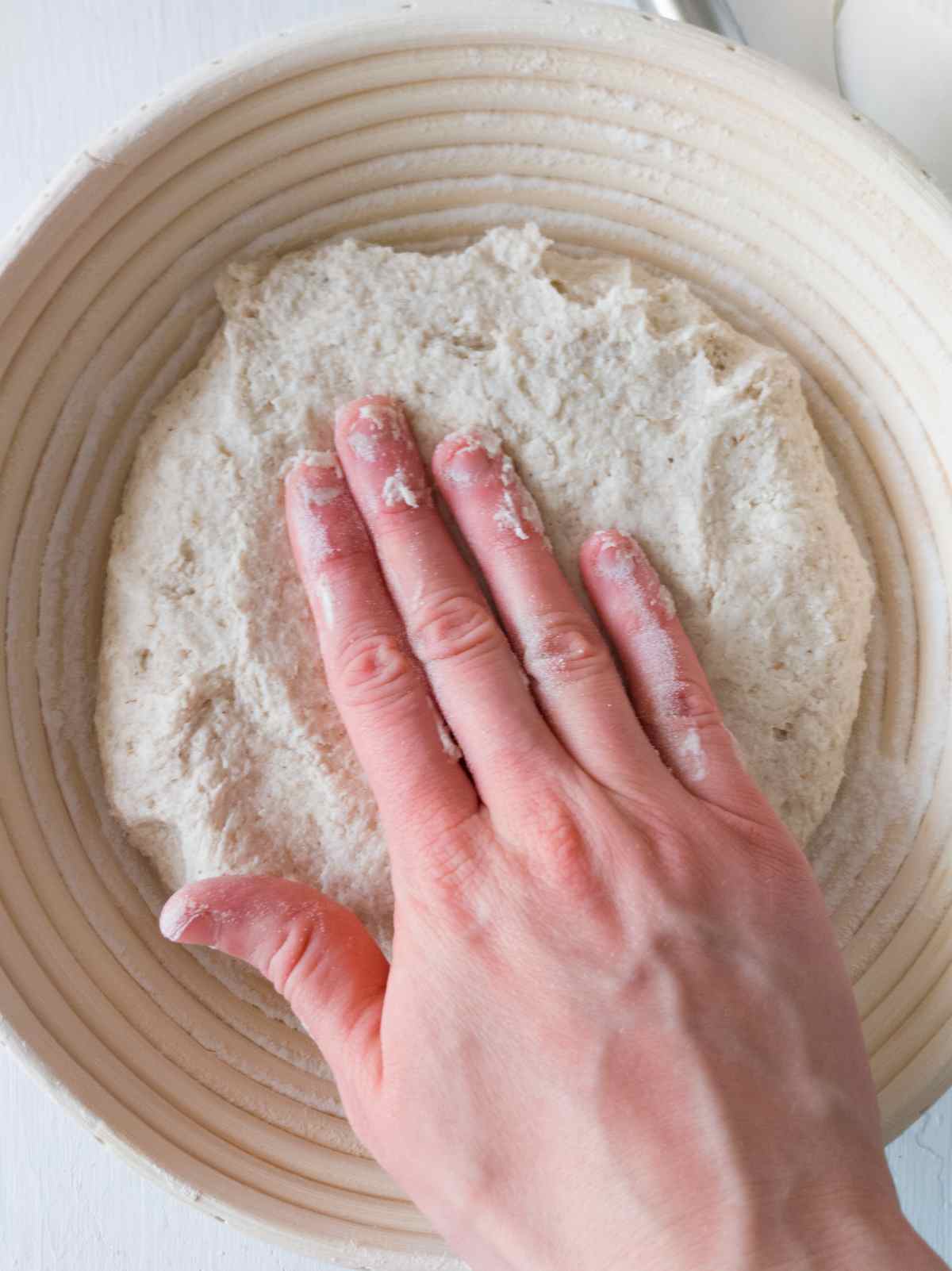
Flour the proofing basket or bowl lined with a kitchen towel and place the dough in it. Press the dough into the basket to create a flat top.
Cover the basket with a kitchen towel and leave to rise at room temperature for about 5 hours or in the refrigerator overnight (12-18 hours).
The dough should puff up during rising but it won't double in size. Don't worry if the dough doesn't rise a whole lot, it will do most of its job in the oven.
Step 6
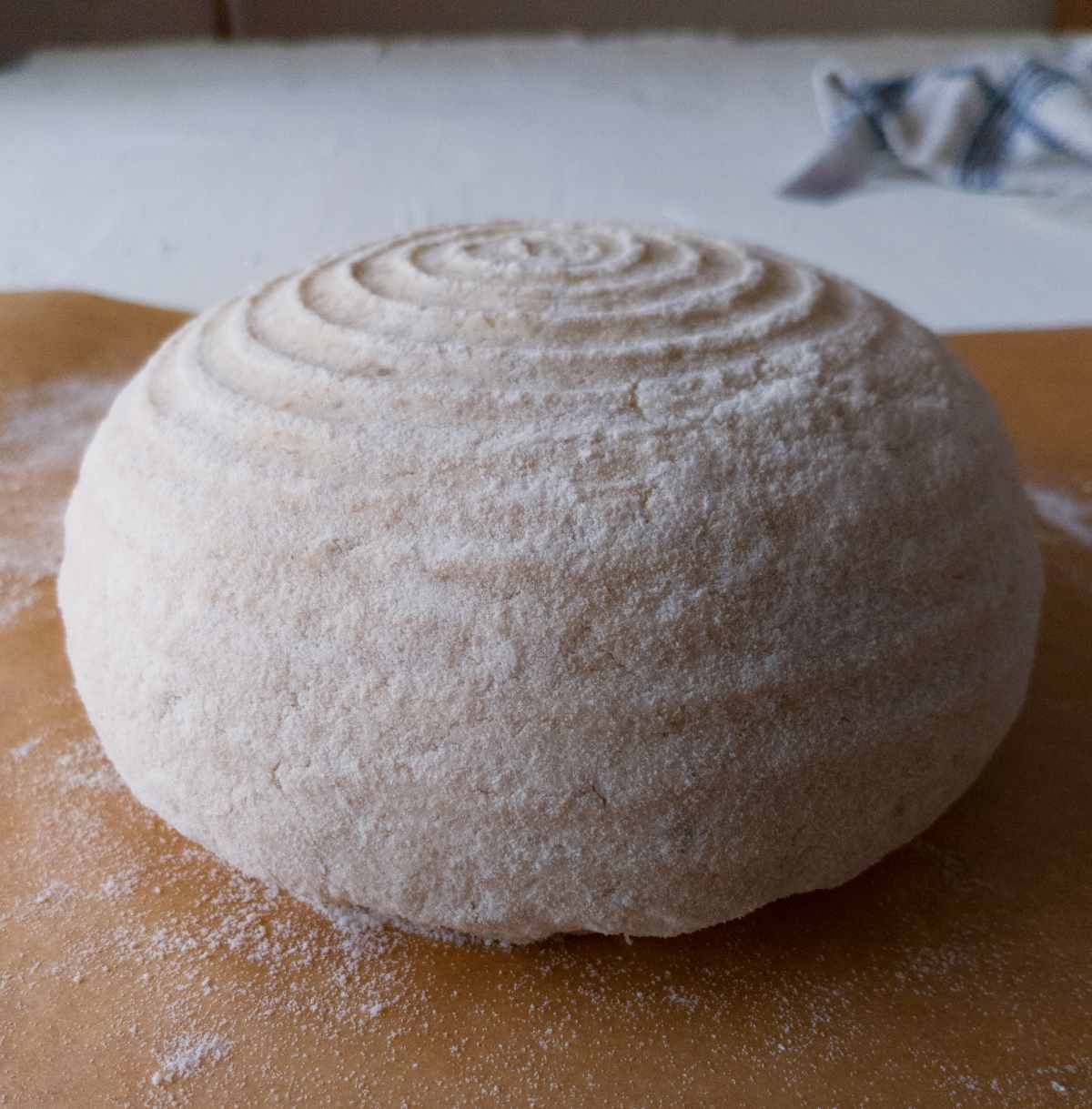
Once the dough has been proofed, gently turn it over onto the working surface.
Carefully shape the dough into a tighter ball by turning the dough around and tucking its sides under itself.
Don't push the dough too hard to avoid losing the air bubbles formed during fermentation.
Step 7
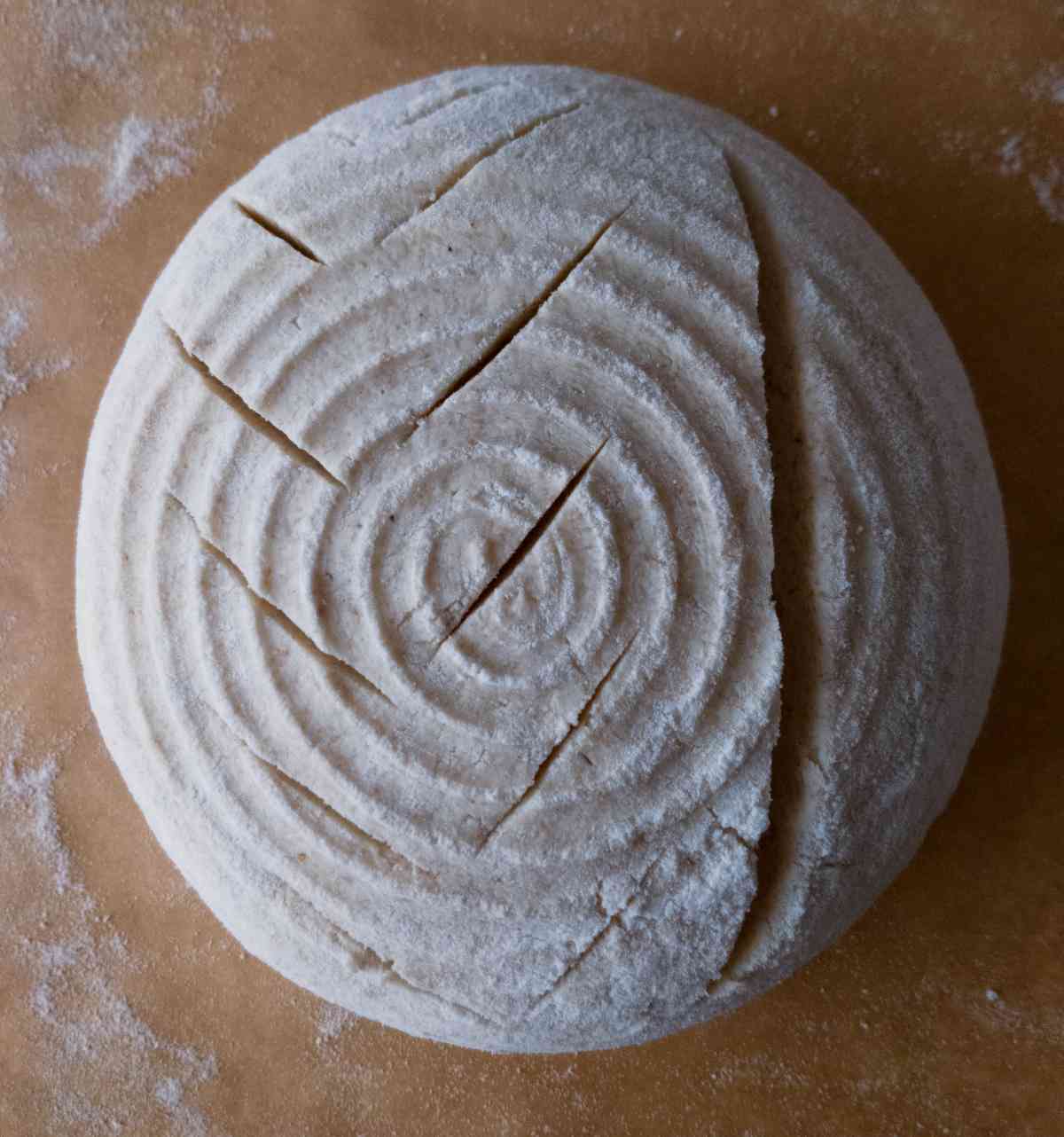
Score the dough with a razor, a lame, or a sharp knife (be creative and make a nice pattern!). Scoring allows for a better oven spring.
Transfer the dough onto a piece of parchment paper and gently lower it into the cold Dutch oven.
Place the Dutch oven with the bread into the oven and start preheating it to 450F/230C. Once the oven is heated, bake for 40 minutes with the lid on.
Then, take the lid off, turn the temperature down to 350F/175C, and bake for another 30 minutes.
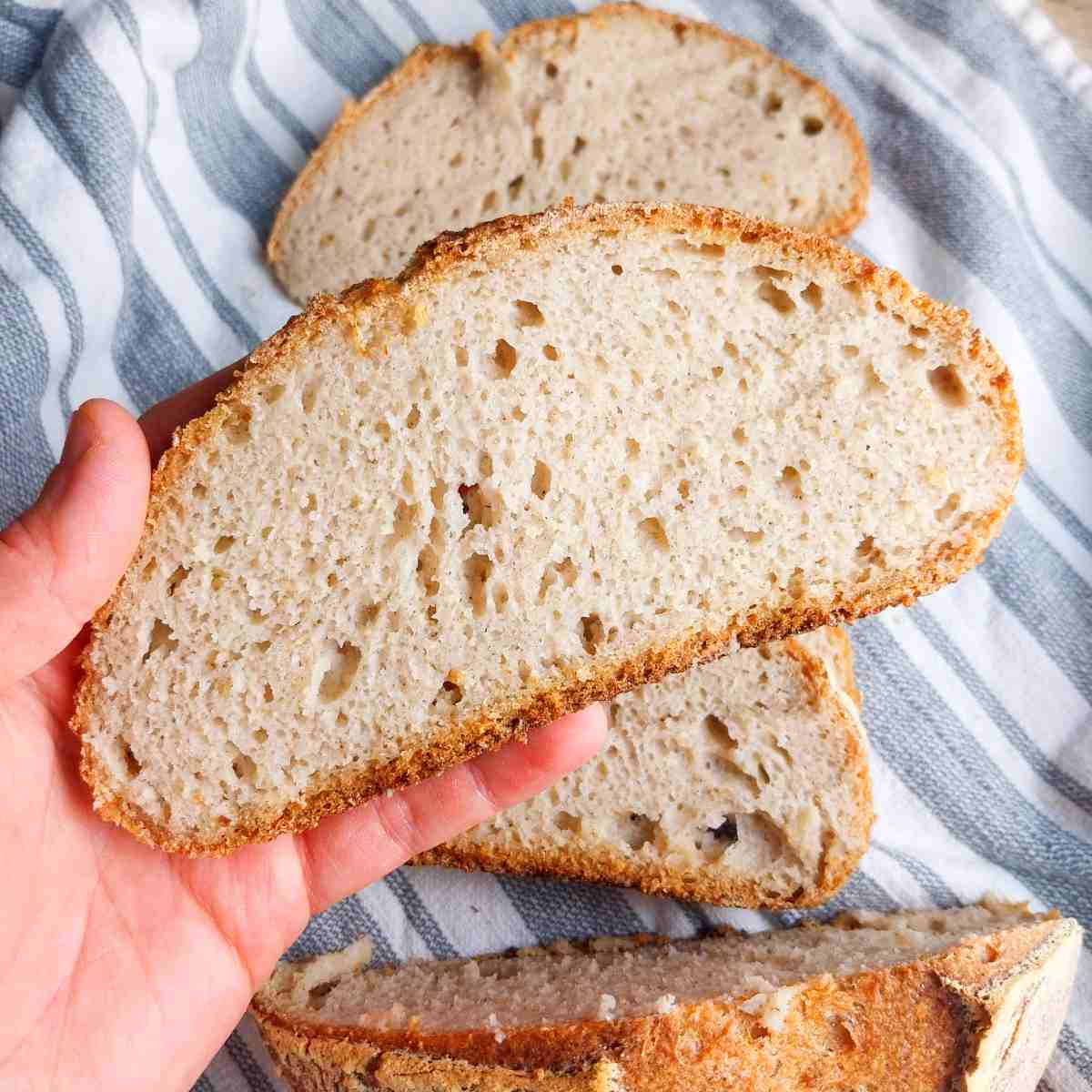
Transfer the bread onto a cooling rack and wait until it is no longer warm to the touch to slice it. Enjoy!
Troubleshooting
Gumminess - if your bread is gummy it might be due to underproofing/overproofing or not baking long enough. If you used other flour types than indicated in the recipe, you might need to adjust the water amount next time.
Too dense - if the bread doesn't have any bubbles and seems way too dense it could be due to a starter that isn't active enough or the cold proofing temperature.
A large hole in between the top crust and the crumb - this is a sign of overproofing the dough. Bake the dough sooner next time!
Frequently Asked Questions
Yes! Gluten-free starters won't always double and depending on the consistency, it might rise very little. You can still use it in bread as long as it is at least 2 weeks old!
You can give it a try but your bread might turn out gummier/drier depending on the contents of that flour blend.
I don't recommend making gluten-free sourdough in a bread machine due to its proofing timing and specific baking needs. Instead, check out these gluten-free bread machine recipes for ideas!
More Gluten-Free Sourdough Recipes to Try


Get my GF sourdough recipes eBook
The top 16 recipes of 2024!
Gluten Free Vegan Sourdough Bread
Ingredients
Wet ingredients
- 20 grams (3 tbsp) psyllium husk, whole husks, if using coarse powder use 20 grams, fine powder - 17g. For more details check my psyllium husk 101 article
- 410 grams (1⅔ cups) water, room-temperature
- 15 grams (1tbsp + 1tsp) sugar/maple syrup, helps the sourdough bacteria
- 70 grams (¼ cup) active sourdough starter
Dry ingredients
- 85 grams (¾ cup) tapioca starch or arrowroot starch
- 95 grams (½cup + 1tbsp) potato starch or 95g (¾ cup) cornstarch
- 180 grams (1⅓ cups) sorghum flour
- 12 grams (2 tsp) salt
- 2 teaspoon baking powder, check the package to make sure it is gluten-free
SAVE THIS RECIPE!💌
Instructions
- Combine psyllium husk, sugar, and room temperature/warm water in a medium-sized bowl, whisk to incorporate, and set aside.
- In a large mixing bowl combine all the dry ingredients (sorghum flour, starches, baking powder, and salt) and whisk to incorporate.
- Once psyllium forms a gel, add it to the bowl with the dry ingredients.Add mature gluten-free sourdough starter to the bowl and mix the dough thoroughly.I like to use an electric mixer for this step but you can also do it by hand if you prefer.
- Once the dough is well incorporated, turn it over onto a lightly floured working surface and flatten it into a disc.Fold each side of the disc onto its middle, flip the dough, and shape it into a ball (refer to the pictures in the post for visual instructions).
- Flour the proofing basket or bowl lined with a kitchen towel and place the dough in it. Press the dough into the basket to create a flat top.Cover the basket with a kitchen towel and leave to rise at room temperature for about 5 hours or in the refrigerator overnight (12-18 hours).The dough should puff up during rising but it won't double in size. Don't worry if the dough doesn't rise a whole lot, it will do most of its job in the oven.
- Once the dough has been proofed, gently turn it over onto the working surface.Carefully shape the dough into a tighter ball by turning the dough around and tucking its sides under itself.Don't push the dough too hard to avoid losing the air bubbles formed during fermentation.
- Score the dough with a razor, a lame, or a sharp knife (be creative and make a nice pattern!). Scoring allows for a better oven spring.Transfer the dough onto a piece of parchment paper and gently lower it into the cold Dutch oven and put the lid on.Place the Dutch oven with the bread into the oven and start preheating it to 450F/230C. Once the oven is heated, simply bake for 40 minutes without opening the oven.Then, open the oven, take the lid off, and transfer the loaf onto the oven rack. Turn the temperature down to 350F/175C and bake for another 30 minutes.Transfer the bread onto a cooling rack and wait until it is no longer warm to the touch to slice it. Enjoy!*If the bottom of your bread tends to burn, place a baking sheet in the bottom of the oven once you take the bread out of the Dutch oven.



Wendy Taylor says
Questions: what is supposed to occur during proofing b/c my dough looks exactly the same (quite dense) when it comes out of the refrigerator? Is it suppose to be rising? Am I doing something wrong? Thx!
Wendy Taylor says
My starter that I use in the recipe rises beautifully so I’m not sure if I should be doing something differently to get the dough to expand during proofing. Thx!
Natasha Levai says
Is your dough on the drier side? You might need to increase the water in the recipe to see a better rise. Also, it is a good idea to proof the dough in a warm spot.
Natasha Levai says
It should be rising, it won't double in size, but it will puff up. If it didn't puff up during proofing, the bread will be dense! I would try proofing at room temperature or even better, in the oven with the light turned on. This will provide the best conditions for the bacteria to thrive.
Mandi says
Isn’t possible to use all rice flour? I don’t have the Sorgum flour. I do have almond flour if I can substitute that in its place? Or all rice flour
Natasha Levai says
You can use all brown rice flour if you prefer, it will yield a denser loaf but it is possible to make! I have a recipe for brown rice flour only here https://www.natashashome.com/brown-rice-sourdough/
I don't recommend using all white rice flour for this recipe as white rice flour will create a gritty and dense loaf that won't ferment properly.
supriya pokhariyal says
hi if we are baking this in loaf tin do we need to create steam in oven for first 30 min
Natasha Levai says
Yes!
Cheryl Lee Pokorny says
First, don't jump to recipe. Just to make sure you know how important this is: DON'T JUMP TO RECIPE!! Natasha gives so many tips before the recipe that are super helpful! Also, why you are waiting for your starter to peak, check out her whole site. Baking gluten-free sourdough is not easy but we can draw on the experience of others who went before us in this adventure. I baked 3 doorstops before I successfully baked this loaf. I did not read all the notes and tips or my loaf would have been even better I'm sure. I was using Bob's Red Mill Gluten Free 1:1 in my previous attempts and the bread was super gummy due to the xanthan gum it that flour mix. I saw Natasha's note about this so I changed my flour not to include the xanthan gum and the bread has such a better texture. I'm going to order her Sourdough e-book now as this was the 2nd recipe of hers that succeeded (check out her cinnamon rolls-yummy).
Josh says
My loaf is turning ok ok, not too gummy compared to 1:1 recipes. However I'm having a hard time hitting 210F without burning the bottom. Top looks great covering with foil but the bottom burns when cooking for the 60 min outside the dutch oven. Less time and the loaf is only at 180F. Any suggestions how to get inside temp up without burning the bottom.
Natasha Levai says
Hi Josh! First, I'd recommend to reduce your first baking part in the Dutch oven to 30 minutes, then after the first part is done, take the bread out of the Dutch oven and place it onto the oven rack for the remainder of the time. Place the oven rack higher up so that it isn't as close to the bottom source of heat. At the same time, place the baking sheet in the bottom of the oven to prevent to limit the heat a little bit.
See if that helps!
Carole Biro says
Do you have a recipe for keto sourdough. I haven’t eaten carbs for years which keeps my weight down.
Natasha Levai says
I don't have a specifically keto sourdough recipe but you can add some of the starter discard to this keto gluten-free almond bread: https://www.natashashome.com/low-carb-gluten-free-bread/
Gail H says
So you have a recipe using 1 to 1 flour? I would love to try that if you do.
Thank you !
Natasha Levai says
Hi Gali! I don't normally use 1 to 1 flour, so as of right now I don't have a recipe for that. What 1 to 1 flour are you interested in?
Karen says
This came out delicious! Thank you so very much.
Question: Do you think I could trade out rice flour and sub buckwheat flour for the dough part? I have a brown rice starter and would still use the brown rice flour for the levain. Thank you.
Natasha Levai says
I think you should be able to use buckwheat instead of rice flour with no problem!
Tree says
I made this for the first time over the weekend, my second sour dough bread. It ate was a big hit in my house! My 12yr old would "sneak" slices of it!
I already had my starter ready, I just used 100 grams of that, is that OK? should I use more? I wasn't sure exactly how much to add. Thank you! We're trying the pretzels today!
Natasha Levai says
If you are using starter instead of making levain, then you need to use 300g of starter!
Rebecca says
Everything is going as planned and after 12 hours in the fridge, the bread is still the same. No indentation when I press my finger in the cold dough. Can I take the bread out of the fridge and try to ferment on the counter?
Natasha Levai says
Yes, let it sit at room temperature and see if anything changes. The bread should rise some before baking!
Lara Flannery says
Hi there!
What do you mean by freeze the loaf?
Natasha Levai says
You mean in freezing it as a whole? You can either freeze the slices or the whole loaf depending on your needs.
Adrienne Steinbach says
Hi can I use white vinegar or is apple cider the way to go ? Cannot wait to try this recipe!!
Adrienne
Natasha Levai says
Yes, absolutely!
Mary says
Hi Natasha, do you instructions for this recipe to bake in a loaf tin rather than Dutch oven? I don't have a Dutch oven but would like to try the recipe.
Thanks Mary
Rachel says
Thanks for the recipe!
Can this recipe be made in a slowcooker?
Natasha Levai says
Hi Rachel! Unfortunately, this recipe is not good for a slow cooker!
Marcelle Blaauw says
Oms I love this bread recipe, I love all your posts and recipes, you are in fact an angel send to help us better our baking!!
I have made this bread 3 times already and am addicted! I keep a slices frozen for a quick lunch.
One question though, can one add like cheese or peppers or so to the dough pre-bake?
Natasha Levai says
I am so happy you are enjoying the bread! Yes, you can add the cheese and peppers to the unbaked dough!
Darlene says
This is my first with GF sourdough bread. It looks beautiful. We will date when cooled! I am inspired by my daughter who is gluten intolerant! Excited that it came out this nice🌺
Natasha Levai says
Excited for you, too!