
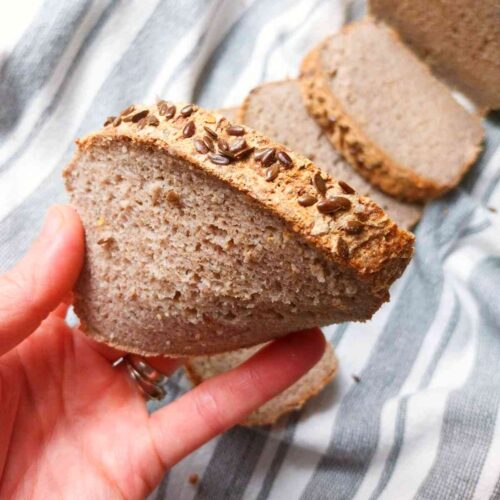
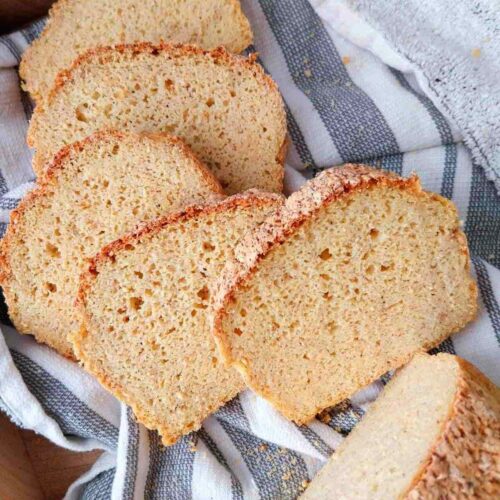
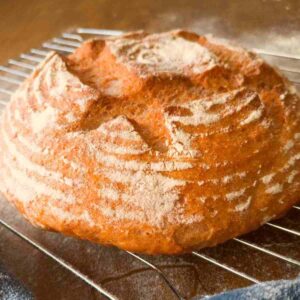
This no-knead gluten-free bread with psyllium husk is soft, moist, flexible, flavorful, and remarkably stable. It is also vegan and very easy to make. The soft and airy crumb is combined with the crunchy crust for the best bite!
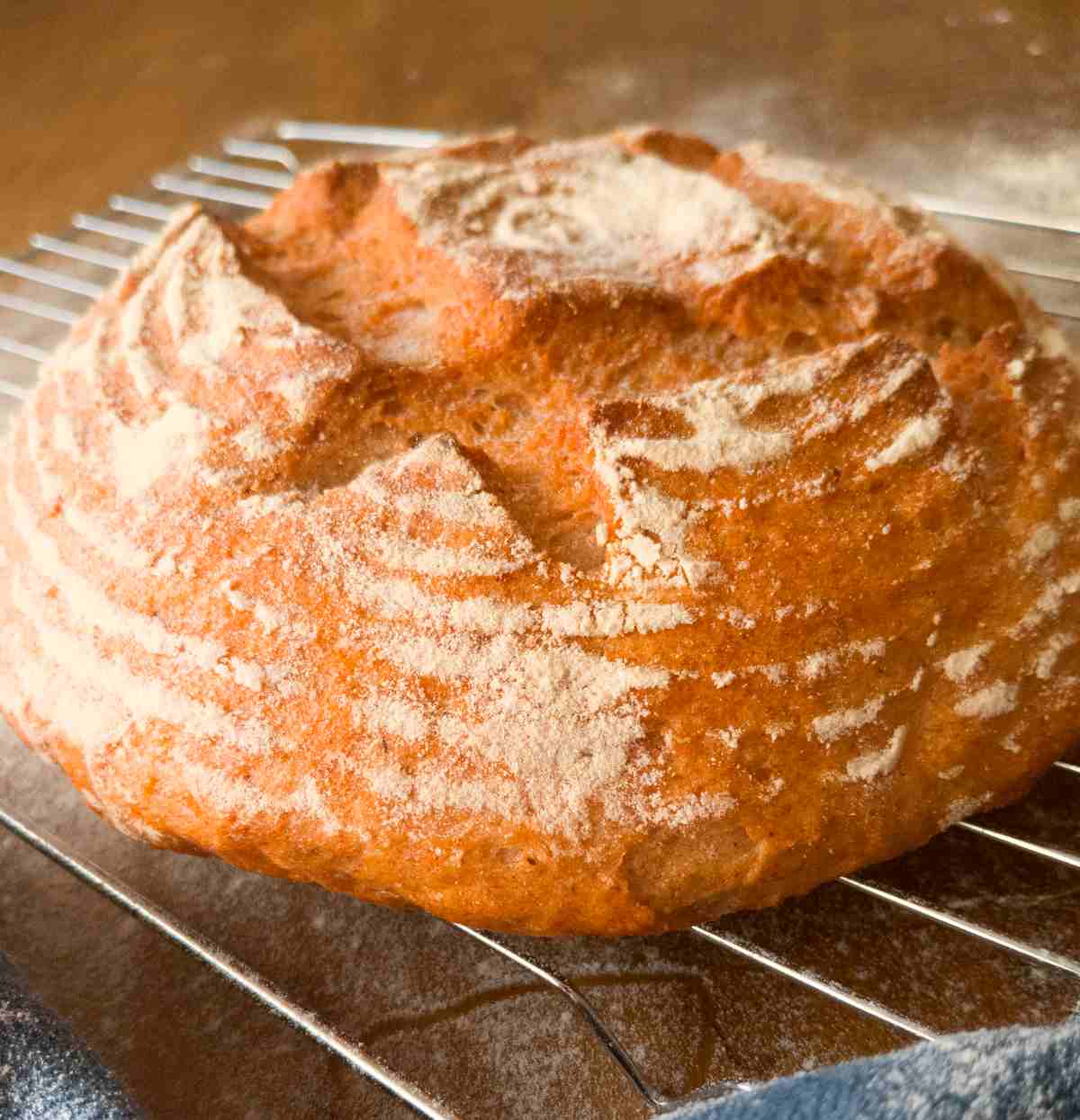
You can make garlic bread or toast the slices to serve along soups, in grilled cheese, or next to a side of fresh mozzarella salad!
Jump to:
Why You Will Love This Recipe
- Texture. Psyllium husk makes the bread incredibly soft and moist!
- Easy to shape. Thanks to psyllium husk, this bread shapes just like a regular loaf!
- No-knead. Since it is gluten-free, you only need to mix the dough, and it's ready for shaping! This method is similar to how I make my extra soft gluten-free Dutch oven loaf.
Whole Husks vs. Powder
When shopping for psyllium husk you will see an option for whole husks or powder. Powder is cheaper and easier to get while whole husks tend to cost a bit more and aren't as easy to find at a grocery store.
I prefer baking with whole husks because they don't clump in water (unlike psyllium powder), don't turn your bread purple (powder can do that depending on the type), and are simply easier to work with. Psyllium powder can be substituted for whole husks if necessary; in that case, you would only use 85% of the amount called for in the recipe!
Read my psyllium husk 101 article for more information and visuals.
Ingredients for Psyllium Bread
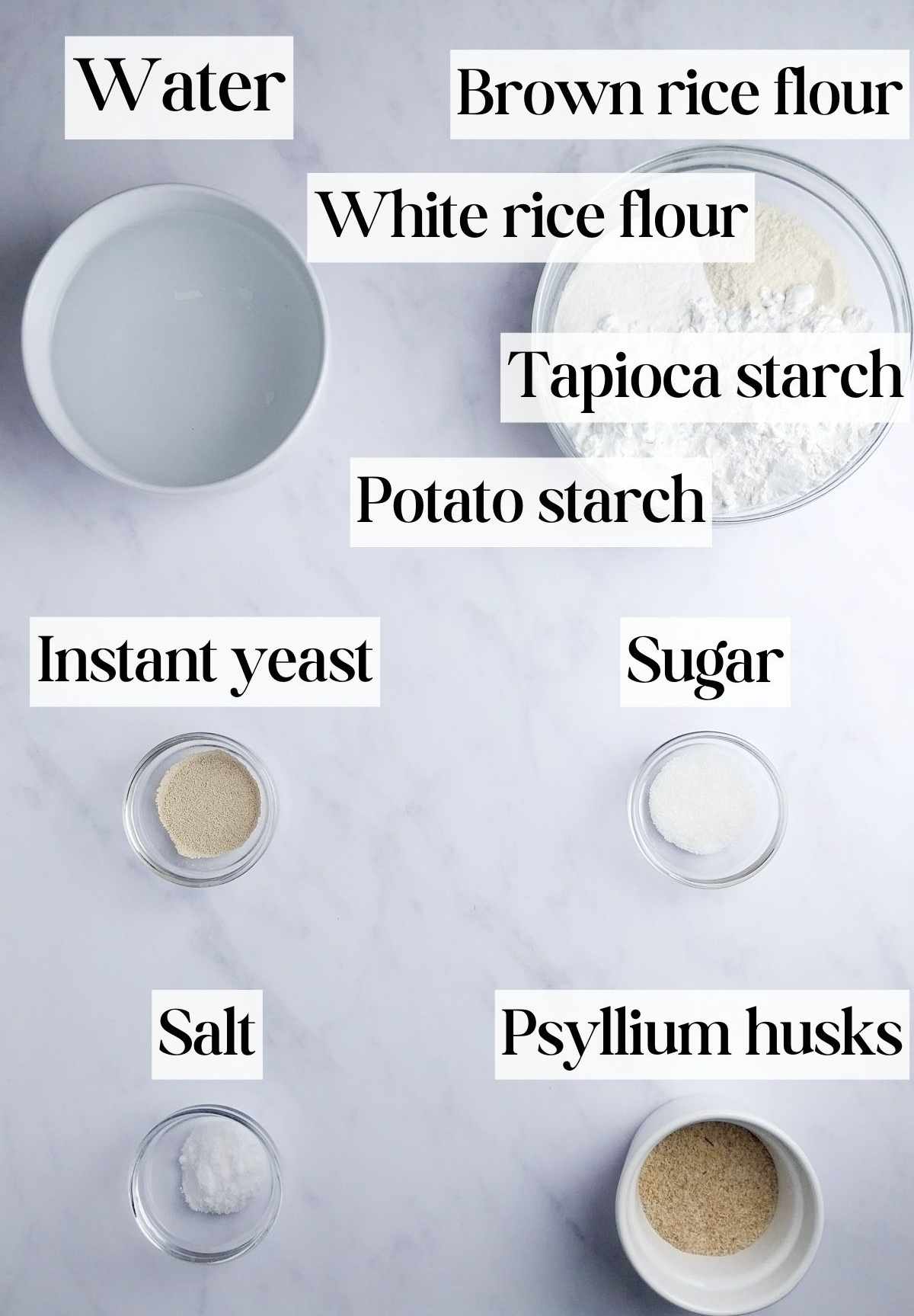
Psyllium husk - preferably use whole husks, but you can use psyllium powder if necessary (use 18g instead of 20g). Check out this psyllium husk guide if you are new to it!
Yeast - I prefer using instant yeast because it doesn't require activation before use.
Substitutes
Psyllium husk - there is no good substitute for psyllium husk! Xanthan gum will yield crumbly and dense bread, so it is not a good option to use in this recipe. Check out my konjac bread if you can't have psyllium.
Sugar - use maple syrup or honey instead.
Yeast - check my yeast-free gluten-free loaf if you can't have yeast! Alternatively, you can try making gluten-free sourdough bread as it uses home-grown natural gluten-free yeast.
Brown rice flour - use sorghum flour instead.
White rice flour - use buckwheat flour instead.
Tapioca starch can be substituted with arrowroot starch.
Potato starch can be swapped with cornstarch.
How to Make Psyllium Husk Bread
Step 1 - Make psyllium gel
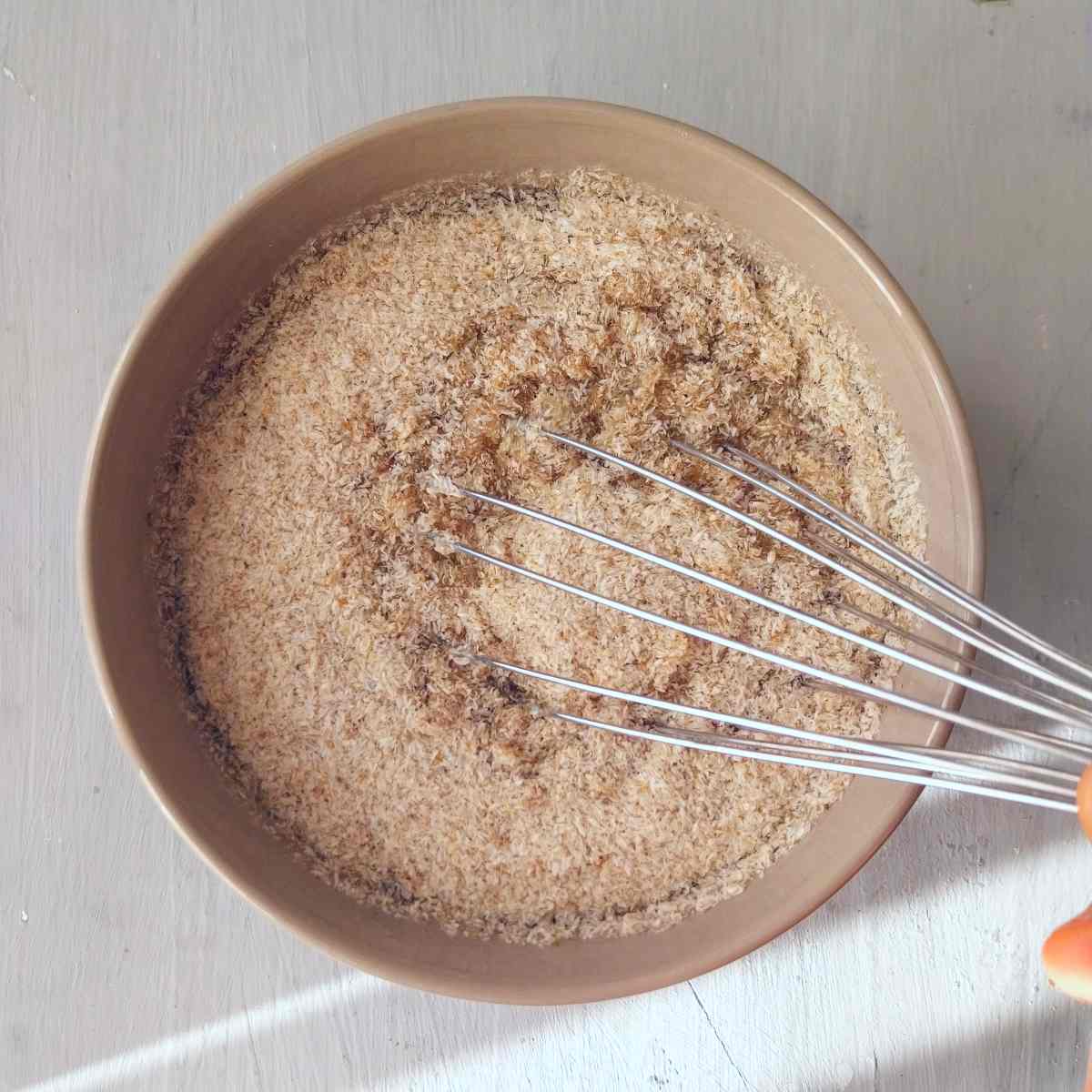
Combine whole psyllium husks, water, and sugar in a medium-sized bowl and whisk to incorporate. Set aside.
Step 2 - Mix the dry ingredients
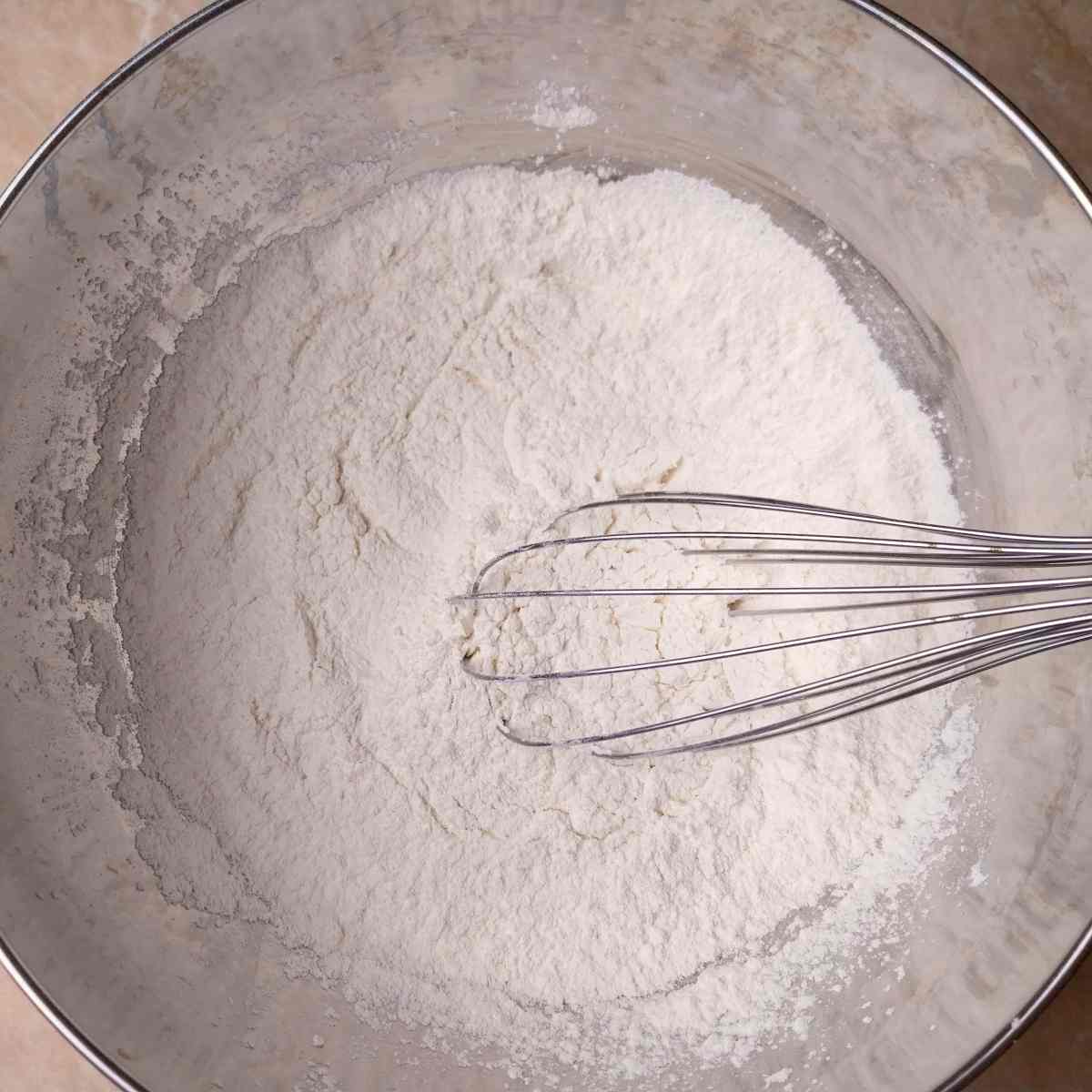
Add the dry ingredients to a large mixing bowl and whisk to incorporate.
Step 3 - Mix the dough
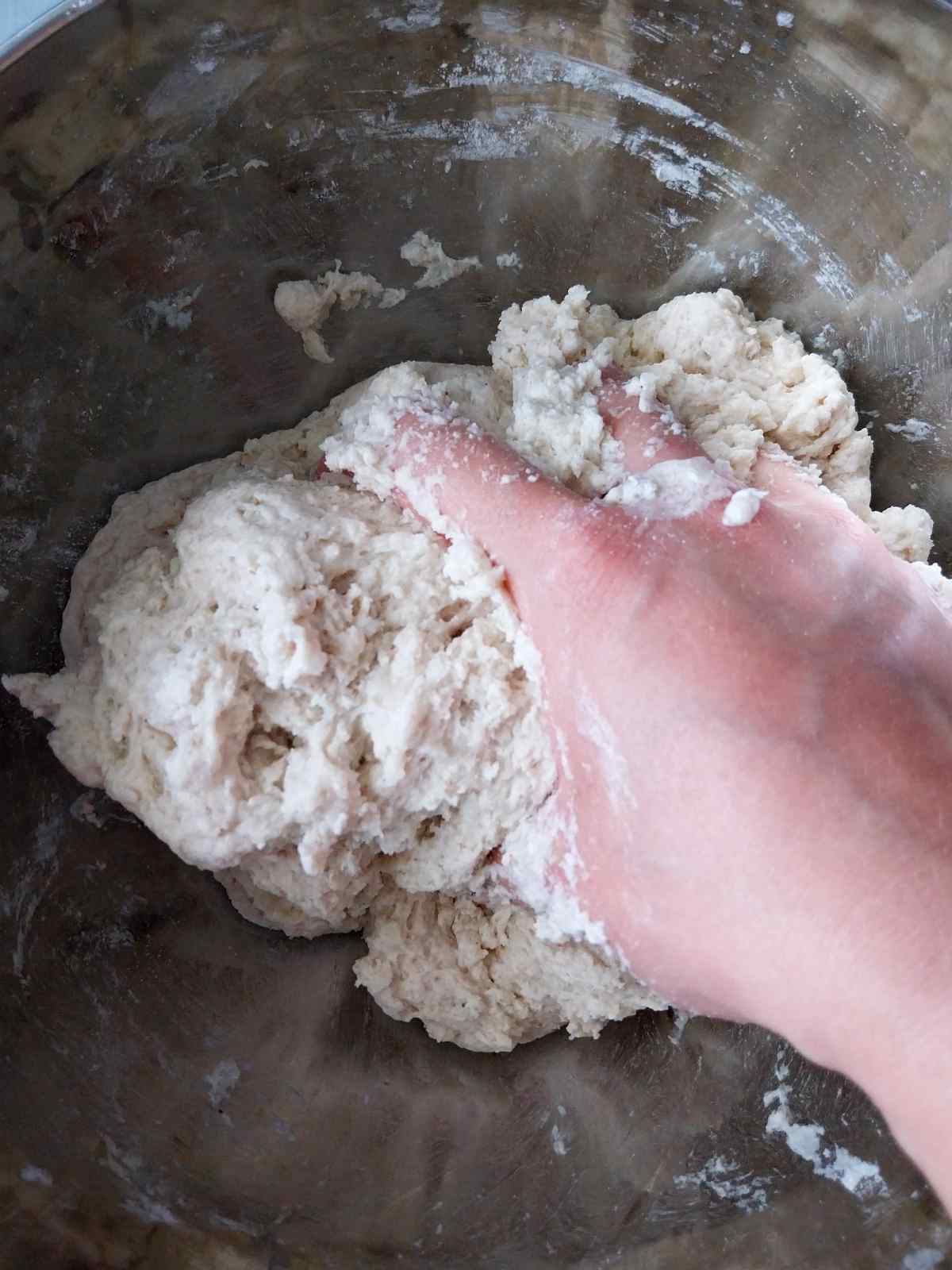
Once the psyllium husk turns into a gel (1-2 minutes), add it to the dry ingredients and mix the dough.
You can mix the dough by hand, with an electric mixer, or with a wooden spoon. It will be sticky but workable!
Step 4 - Shape the loaf
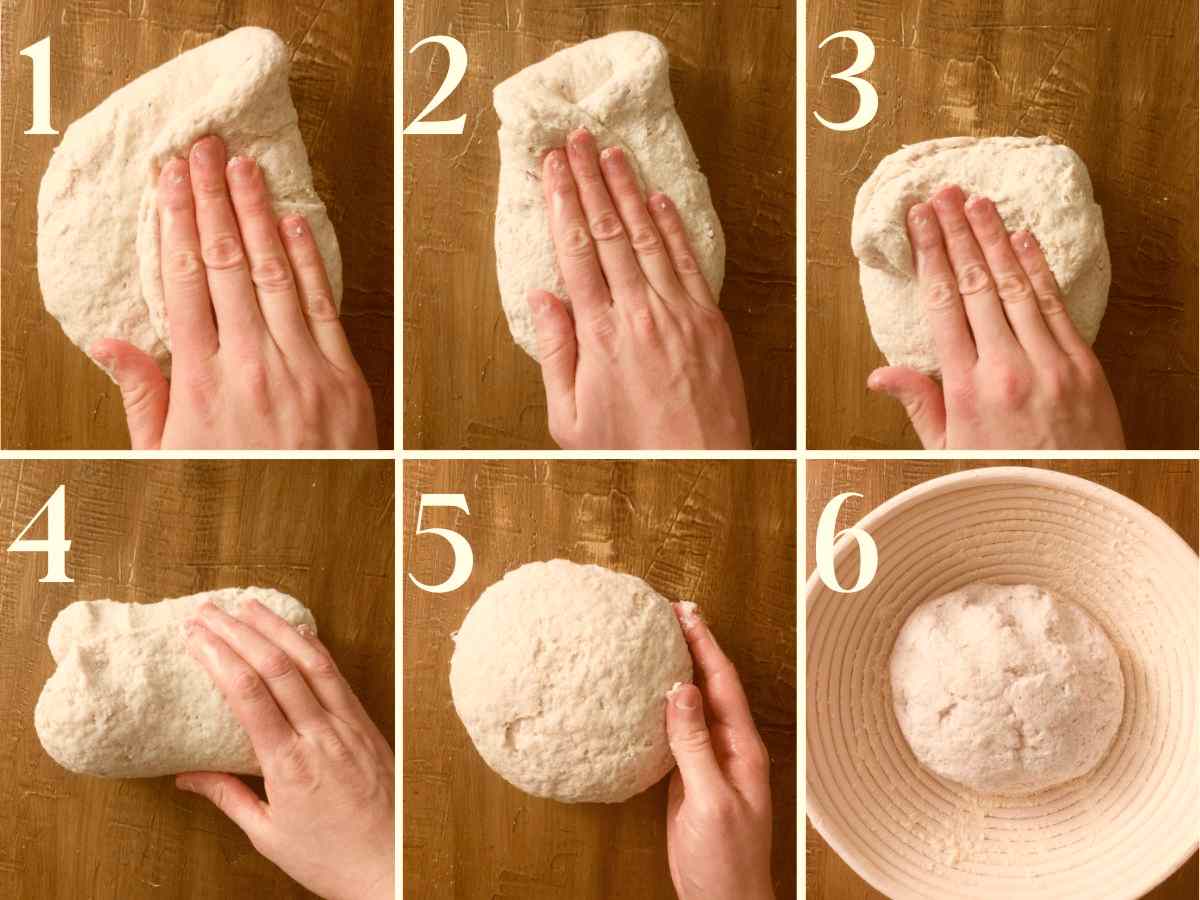
Transfer the dough onto a lightly floured working surface and flatten it into a disc. Shape the dough by folding each side of the dough disc onto its middle, then flip it.
Shape the dough into a ball by turning it around with your hands and tucking the sides under. See the pictures or video for visual instructions!
Place the dough into a floured proofing basket or a mixing bowl lined with a kitchen towel. If you are baking the bread in a bread pan, place it into the greased bread pan. Cover the dough with a kitchen towel.
Leave the dough to rise for about 30-60 minutes. Keep an eye on the bread; you don't want it to rise too high (or double in size) or it will fall during baking.
Step 5 - Bake
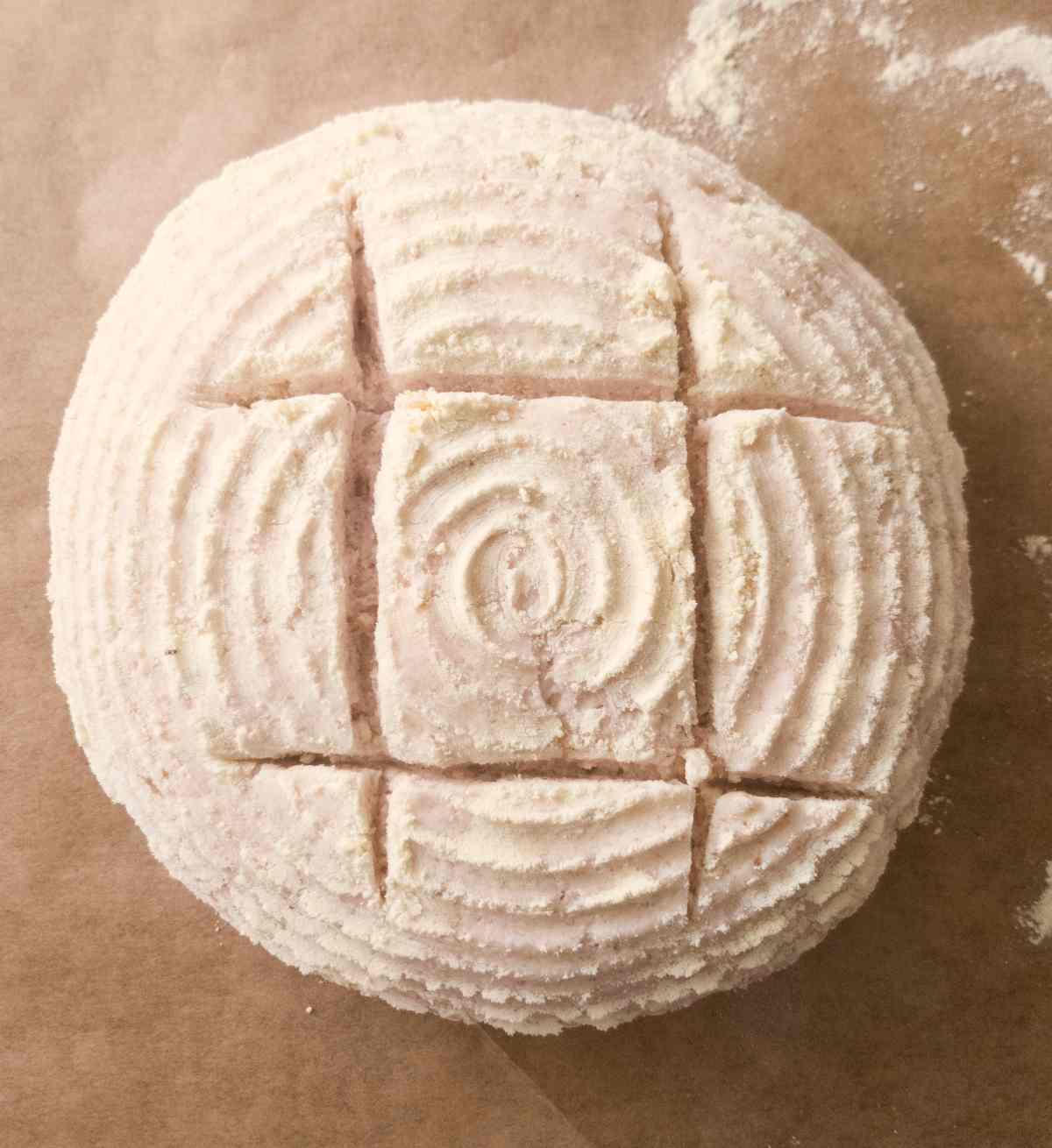
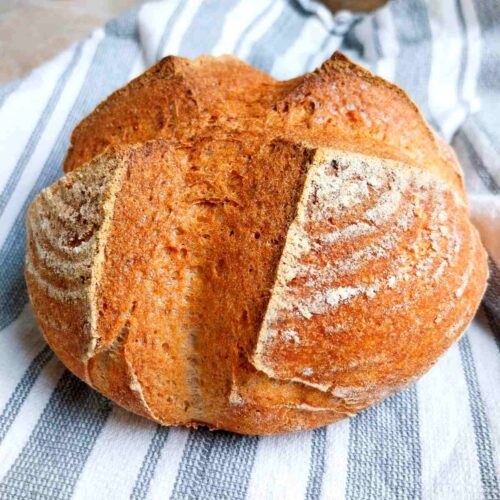
Once the loaf is done proofing, carefully transfer it onto a piece of parchment paper, score (cut the surface with a razor) about 1inch/2.5cm deep, and carefully lower the loaf into the Dutch oven (unless you're baking in a bread pan).
Place the lid onto the Dutch oven and transfer it to the oven. Start preheating the oven to 450°F/230°C. Once the oven is ready, start the timer and bake for 40 minutes.
Then, carefully remove the loaf from the Dutch oven, transfer it to the oven rack, lower the temperature to 350°F/180°C, and keep baking for another 30 minutes.
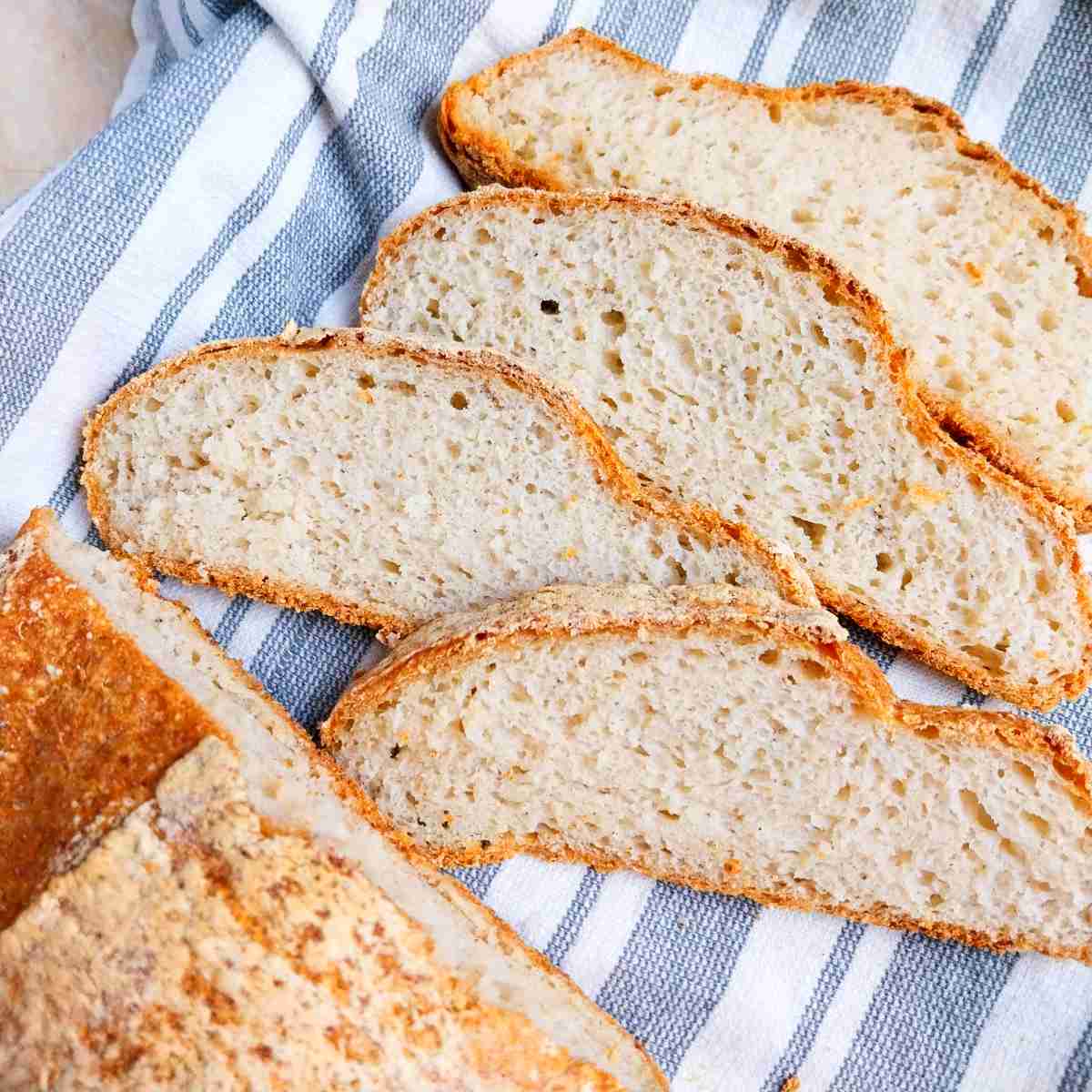
Let the bread cool completely (until no longer warm to the touch) and enjoy!
Expert Tips
- Yeast will do best if you use room temperature ingredients!
- Use a digital scale to ensure the best results.
- Grease your hands with oil to prevent the dough from sticking to them.
- Let the bread cool down completely (until no longer warm to the touch before slicing it.
- Proof the dough in the oven at 120°F/50°C to speed up the rising process!
Common Questions
I never tried making this recipe in a bread machine. However, here is a great collection of gluten-free bread machine recipes that work great!
In gluten-free bread, psyllium husk acts as a binder and moisturizer, helping to replicate the structure of wheat bread. While it does help "replace" gluten, combining it with xanthan gum is key to achieving a soft, fluffy texture - especially in recipes like this gluten-free sourdough.
Psyllium bread is gluten-free bread made with psyllium husk as a gluten substitute to provide structure, chewiness, and moisture to the loaf like in these fluffy buckwheat rolls.
Store bread with psyllium husk at room temperature in a bread bag or a container for 3-4 days, or slice and freeze for up to 3 months. Defrost in a microwave or thaw the slices at room temperature!
More Gluten-Free Recipes You Will Love!
Get my new
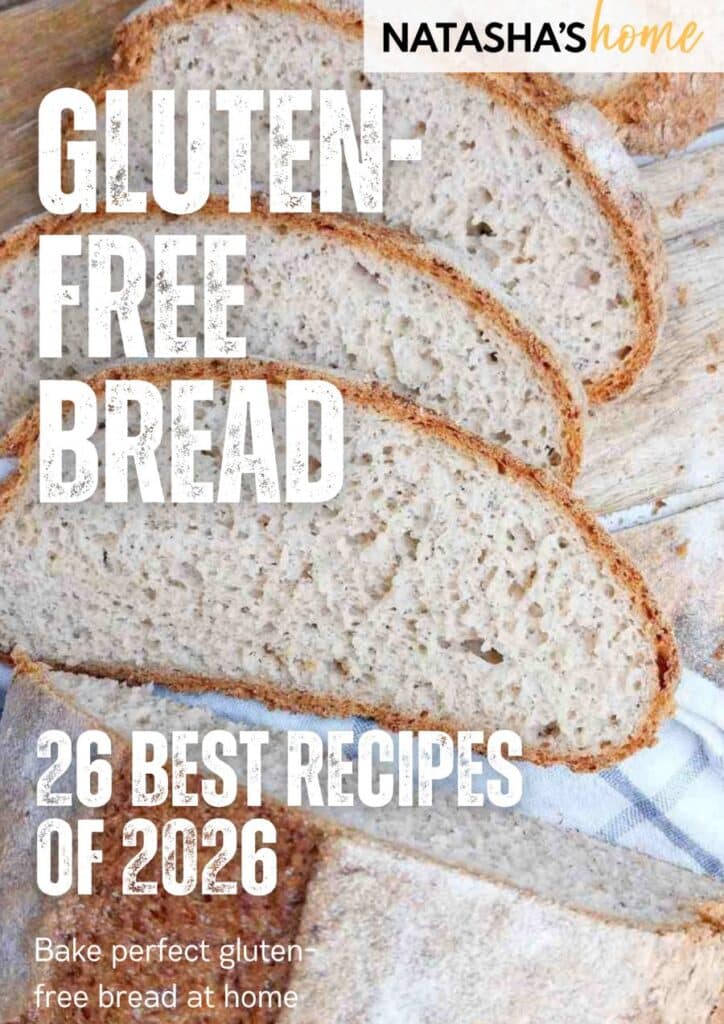
Gluten-Free Bread Recipes eBook
The top 26 recipes of 2026! Includes a bonus conversion chart for gluten-free flour.
Gluten-Free Bread With Psyllium Husk
Equipment
- dutch oven (a cast iron skillet or a regular bread pan will work, too!)
- 1 digital scale (strongly recommended)
Ingredients
Wet ingredients
- 20 grams whole psyllium husks if using powder, use 18 grams
- 435 grams water room temperature or warm
- 15 grams sugar or honey/maple syrup
Dry ingredients
- 100 grams brown rice flour or sorghum flour
- 100 grams white rice flour
- 100 grams tapioca starch or arrowroot starch
- 100 grams potato starch or cornstarch
- 12 grams salt
- 7 grams instant yeast
SAVE THIS RECIPE!💌
Instructions
- Combine whole psyllium husks, water, and sugar in a medium-sized bowl and whisk to incorporate. Set aside.20 grams whole psyllium husks, 435 grams water
- Add the dry ingredients to a large mixing bowl. Whisk to incorporate.15 grams sugar, 100 grams brown rice flour, 100 grams white rice flour, 100 grams tapioca starch, 100 grams potato starch, 12 grams salt, 7 grams instant yeast
- Once the psyllium husk turns into a gel (1-2 minutes), add it to the dry ingredients and mix the dough.You can mix the dough by hand, with an electric mixer, or with a wooden spoon. It will be sticky but workable!
- Transfer the dough onto a lightly floured working surface and flatten it into a disc. Shape the dough by folding each side of the dough disc onto its middle, then flip it.Shape the dough into a ball by turning it around with your hands and tucking the sides under. See the pictures in the post or the video down below for visual instructions!
- Place the dough into a floured proofing basket or a mixing bowl lined with a kitchen towel. If you are baking the bread in a bread pan, place it into the greased bread pan. Cover the dough with a kitchen towel.Leave the dough to rise for about 30-60 minutes in a draft-free area. Keep an eye on the bread, you don't want it to rise too high (or double in size) or it will fall during baking.
- Once the loaf is done proofing, carefully transfer it onto a piece of parchment paper, score (cut the surface with a razor) about 1inch/2.5cm deep, and carefully lower the loaf into the Dutch oven (unless you're baking in a bread pan).Place the lid onto the Dutch oven and transfer it into the oven. Start preheating the oven to 450F/230C. Once the oven is ready, start the timer and bake for 40 minutes. Then, carefully remove the loaf from the Dutch oven, transfer it to the oven rack, lower the temperature to 350F/180C, and keep baking for another 30 minutes.
- Let the bread cool completely (until no longer warm to the touch) and enjoy!
Video
Notes
- Yeast will do best if you use room temperature ingredients!
- Use a digital scale to ensure the best results.
- Grease your hands with oil to prevent the dough from sticking to them.
- Let the bread cool down completely (until no longer warm to the touch before slicing it.
- Proof the dough in the oven at 120°F/50°C to speed up the rising process!

Liz says
One of the best gluten free breads I have come across. Had to make some changes to the recipe as the gf flour mix I used required more water. I also added a whole egg. Cooking the bread in a cast iron skillet made the crust delicious. I will definitely make it again. Thanks for the recipe.
Michelle Vest says
I have great difficulty finding a receipt to meet all of my needs as far as my ingredients except this one. I found a few things very confusing in this recipe and hoping you could clarify so I can use this recipe. I do not see a full explanation of how to use thethe vinegar. Also the measurements of the water to use for the yeast do not match the main ingredients versus the instructions. I only have powdered psyllium husk that I am planning to use and I also do not understand where you say to add the powder to the dry ingredients but still use all the water? When do I use it? Thank you!
Natasha Levai says
Hi Michelle! Thank you for your note, I will need to go in and edit the text. Vinegar is for the yeast to feed on, so you can add it at any point in the recipe. Follow the ingredient list in the recipe card, that is the most correct one, and if there are differences, I will go in and edit those as well! With psyllium husk powder, you can try using it, but in my experience it creates a much wetter dough that doesn't shape as well as the one created with whole husks.
If you use powder, you will need to add it to the dry ingredients and still use all the water, because psyllium powder will eventually absorb that water!
melody says
What purpose does the yeast serve in this recipe? Without gluten, the yeast has nothing to work with. Could those of us who cannot have yeast leave it out?
Natasha Levai says
Hi Melody! Yeast feeds on carbohydrates, not on gluten, so it will still work well with a gluten-free flour blend. If you take out the yeast from the recipe, your bread will be a gummy brick, so I wouldn't recommend that! If you are intolerant to yeast, you can try making a gluten-free sourdough bread!
Paula Taylor says
I have tried so many gluten free bread recipes only to end up with solid bricks or some inedible gluey substance. But this bread is actually good, even if you aren't gluten-free. It is easy to make and you can mix in different flours for different tastes.
Charlie says
Hi hi. I think you have a typo. The first time I made it I made it according to the typo, and hooboy was it purple and springy. Still had really good flavor though. Anyhow, the typo:
In the ingredients section at the bottom, you have this.
20 grams (11.5 tsp) psyllium husk. Since I use tsp/tbsp measurements, I put 11.5 tsp in. Even at the time this seemed excessive, but I did it! It should read (4tsp)
Anyhow, awesome stuff you have here. Excellent!
Natasha Levai says
Thank you!! I actually took the tsp measurements from another source as I myself only use a scale. Thank you for pointing this out! I will go in and fix it.
Pat says
I just made this bread . It didn't rise well, but that is always my challenge with every bread. I added some shredded cheddar on top and it was delicious and SO soft inside- the 1st time I have used the psyllium husks. What a great addition. Do you have any other GF bread recipes with it? Anyway.. I just looked at my printed recipe - I think it's a few months old. But it says 500 gms of GF flour, which is what I did. The current recipe on your site says 400 gms. of flour. How did that happen? I assume it should be 400 not 500? Was that my problem? All other ingredients, notes, instructions on my print out are the same. I'm about to make it again, and will do 40 gms. Thanks for the recipe.
Natasha Levai says
Hi Pat! Yes, I changed the recipe to 400 grams. I was tweaking it and realized that depending on what flour you use the results will be different. So, I specified the exact flour types and limited the volume to 400g to ensure stable results!
Pat says
Awesome! Thank you.
Cathy says
You mention apple cider vinegar in the beginning, but it’s not listed in the ingredients. How much should I add and when should I add it?
Natasha Levai says
Oh, you are right! I used to have the apple cider vinegar in the recipe, now I make bread without it. Basically, apple cider vinegar helps yeast to raise the bread but I find that instant yeast does the job great even without the vinegar. I used to add 12g of it to the liquid ingredients.
Natasha Levai says
Hi Bon! Before, this recipe used to have 400g of flour and recently I updated it to be 500g because with some blends the dough was too wet to hold its shape. So, at this point you would want to add 50g additional flour and 50g additional starch!
Sarah says
I just baked this recipe using 500g like you stated in the above comment and my dough was very stiff and didn’t rise at all?!
The recipe initially stated 400g, so I’m confused as to what measurements I’m to use.
Natasha Levai says
It is 400g just like the recipe says! The comment above is outdated and I will remove it.
Mona says
This bread requires only one proofing right ?
I’m about to make it now and was wondering if a second proof is needed before baking. That’s what I do with my regular breads.
Natasha Levai says
Hi Mona! You are right, this bread only requires one proofing. With gluten-free breads you don't need to do two stages of proofing!
Sidra says
Can I use this recipe in my bread machine (with gluten free setting)?
Natasha Levai says
Hi Sidra! I have never tried it in a bread machine but I think it could work! Let me know if it does! 🙂
Sophie says
Hi! I made this recipe twice and the bread is very sticky when I cut it, like stick to the knife sticky but when I toast it or leave the loaf on the counter it kinda dries ?!? I used all the same ingredients as you and used a Dutch oven and it tastes great when toasted… Any ideas?
Thank you!
Natasha Levai says
Hi Sophie! Try reducing water by 20g at a time and see how the bread turns out!
Sophia says
What brand of psyllium husk do you use? The one I tried in another recipe turned my bread purple. It was a psyllium husk powder so not sure it there is a difference in color between the whole husks and the powder?
Natasha Levai says
Hi Sophia! I buy psyllium husk locally online and I live in Europe so I don't think you can get the same kind but generally, yes, powder might turn your bread purple while whole husks should not. You can also buy "blond" psyllium husk if you find it. Here is a post I have on psyllium husk in gluten free baking with an amazon link to buy it. 🙂
Emily says
i’ve made this bread twice now and it’s so simple and delicious!!!
Natasha Levai says
Thank you so much for your feedback, Emily!
Amanda says
Hi! If I am to use gluten free sourdough starter, how many grams would I add in for this bread recipe? Do I need to adjust anything else?
Thanks! Your site has been super helpful to me 🙂
Natasha Levai says
Hi Amanda! To make a GF sourdough bread I would recommend following a specifically designed recipe like this one https://www.natashashome.com/gluten-free-sourdough-bread/ !
Linda says
My bread didn’t seem cooked. Very doughy. Cooked it an additional 15 minutes and still doughy. Any suggestions?? I was so hoping this was the recipe I was looking for.
Natashashome says
Oh no!! I would love to help you! What flour did you use? Did your bread rise? How long did you leave it out for rising? What temperature did you bake it at?
Natashashome says
Hi Lori! I had a different bread recipe here before and that comment did not get removed when the recipe was updated! No, no eggs in this bread. 🙂
Natashashome says
Hi Carolyn! Those comments were related to another bread recipe I had on this page before. I removed them to prevent confusion! 🙂 The post itself has the correct information.
Barbara Ernst says
What is your flour combo? I’m allergic to wheat, rice and almond. Thanks
Natashashome says
I use rice flour in my blend but you can use rice-free gluten-free flour. For example, use 140g of millet flour, 140g of sorghum flour, and 120g of any starch of choice (you can use 30g of tapioca starch and 90g of cornstarch, for example).