
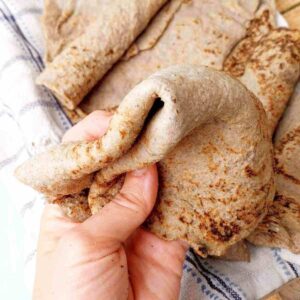
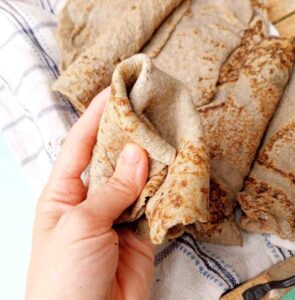
Here you will find a Ragi Roti recipe that bends, doesn't crack, holds up in wraps, and stays soft and moist even after cooking. Ready within 30 minutes, it only calls for 4 ingredients and has a subtle and spiced flavor that reminds me I'm making something not-so-European! For more soft & pliable rotis, see my jowar roti and bajra roti recipes.
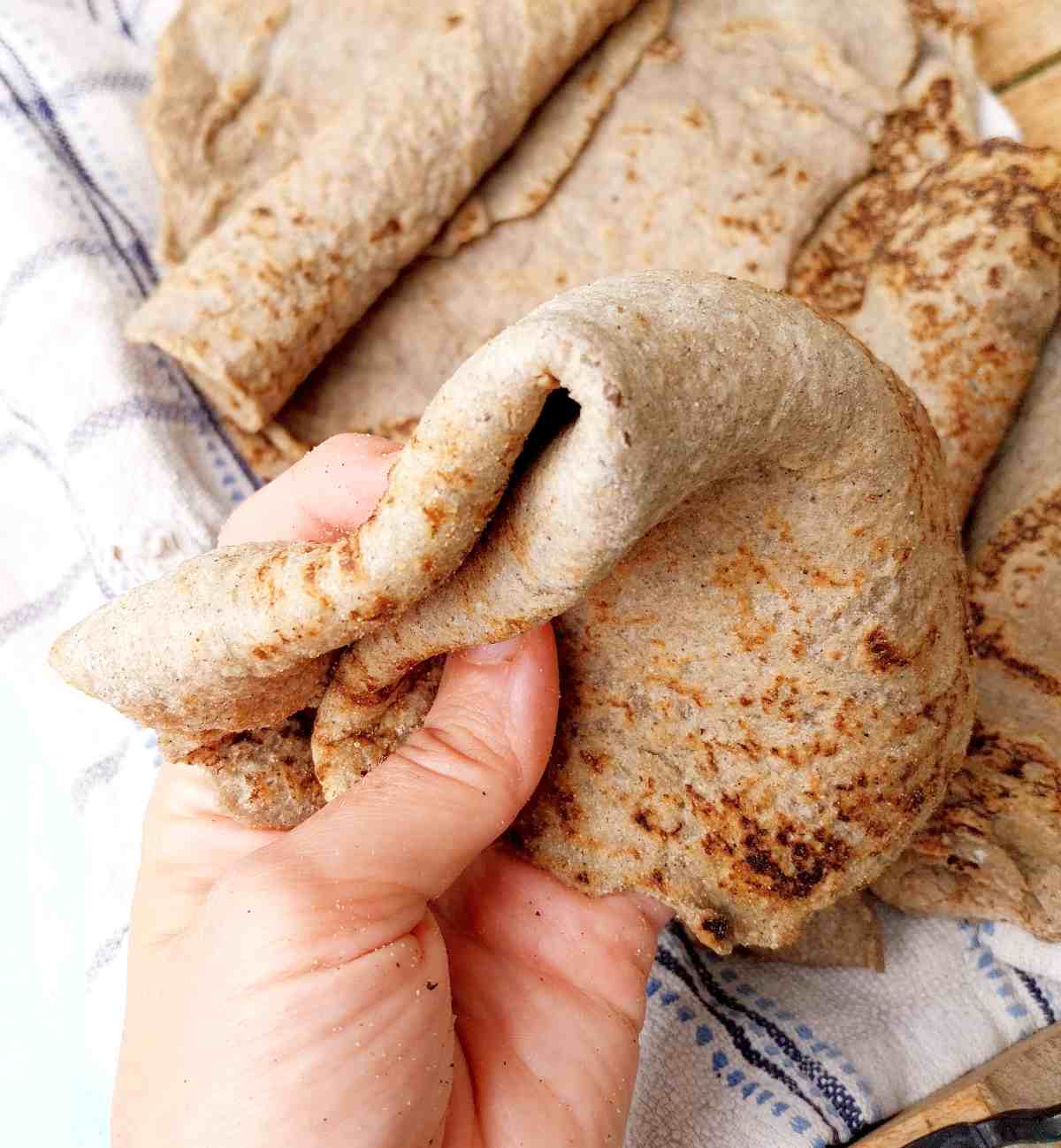
Ragi roti is a type of Indian flatbread made with ragi flour, also called finger millet (see ragi biscuits). It's gluten-free, has a unique, nutty taste, and is a staple in South Indian homes, especially in Karnataka. People eat it with curries, chutney, or simply dip it in sauces or yogurt. It's also called nachni in Marathi or kezhvaragu in Tamil. The flavor slightly reminds me of my buckwheat flatbreads.
Jump to:
Why You'll Love This Recipe
- Only 4 simple ingredients, including salt and water.
- Only takes 30 minutes to make.
- Soft, pliable, and stable - thanks to psyllium husk!
Why Ragi Is Called the Wonder Millet
Honestly, ragi kind of deserves the hype. Here's why:
- More calcium than most dairy.
- Lots of fiber and iron.
- Low glycemic index (blood sugar friendly).
- 100% gluten-free and naturally high in plant-based protein.
Why Psyllium Husk Changes Everything
This is the secret ingredient. Psyllium husk gives the dough that magic elasticity you usually only get from gluten. The dough is easy to roll, the rotis are soft and pliable, and they stay this way for 1-2 days! Psyllium husk can be pricey, but a little goes a long way, and it's totally worth it.
Ingredients for Ragi Roti
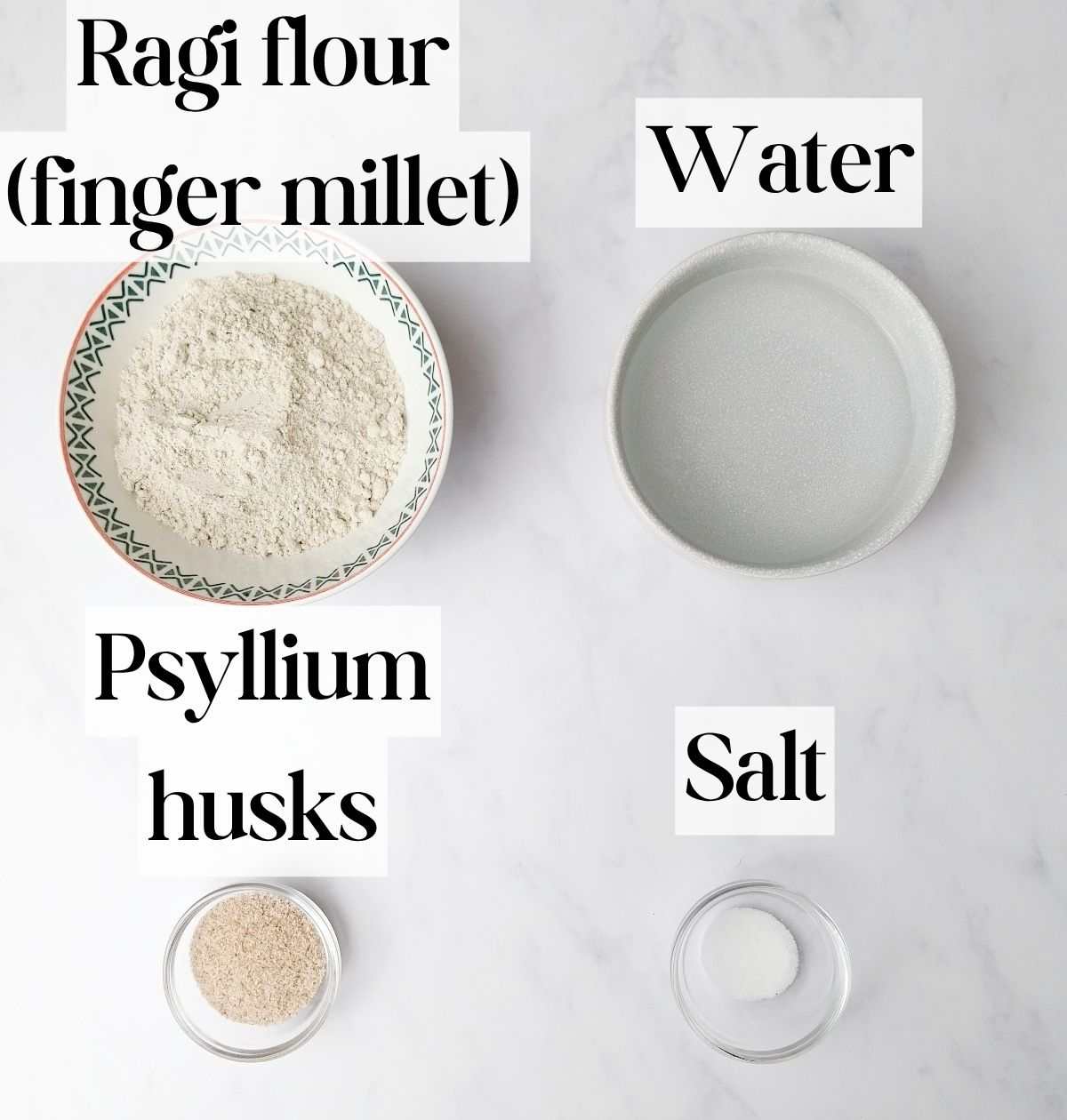
- Ragi flour is finely ground finger millet that is grey in color.
- Psyllium husks (isabgol) - I recommend using whole husks, although powder works, too.
See the recipe card for quantities.
Substitutions
Psyllium husks - please don't leave this ingredient out, and don't try substituting it with common psyllium husk alternatives because they won't work in this nachni roti recipe.
Ragi Roti Variations
- Masala - Chopped onion, chili, cumin, and coriander.
- Veggie-loaded - Carrot, beet, spinach. Whatever's in the fridge.
- Garlic & herb - Mint, parsley, crushed garlic.
- Stuffed - Sour cream mashed potatoes with cream cheese or paneer inside.
- Sweet - Banana, jaggery, cinnamon for a sweet breakfast.
- Seasonal - Ajwain or methi in winter. Mint or cucumber in summer.
When to add stuff
Stir veggies and spices in after the psyllium has bloomed but before the flour. For stuffed versions, just keep the dough plain and do your filling magic after rolling.ng to make this recipe, make sure to follow this top tip!
How to Make Ragi Roti

Step 1. Pour the water into a medium mixing bowl and whisk in the psyllium husk. Let it sit for 2-3 minutes to form a thick, gel-like mixture.

Step 2. Add the ragi flour and salt directly into the bowl with the psyllium gel. Mix the dough using a spatula, wooden spoon, or just dive in with your hands (my favorite method). Once it comes together, shape it into a ball and place it onto a lightly floured working surface.
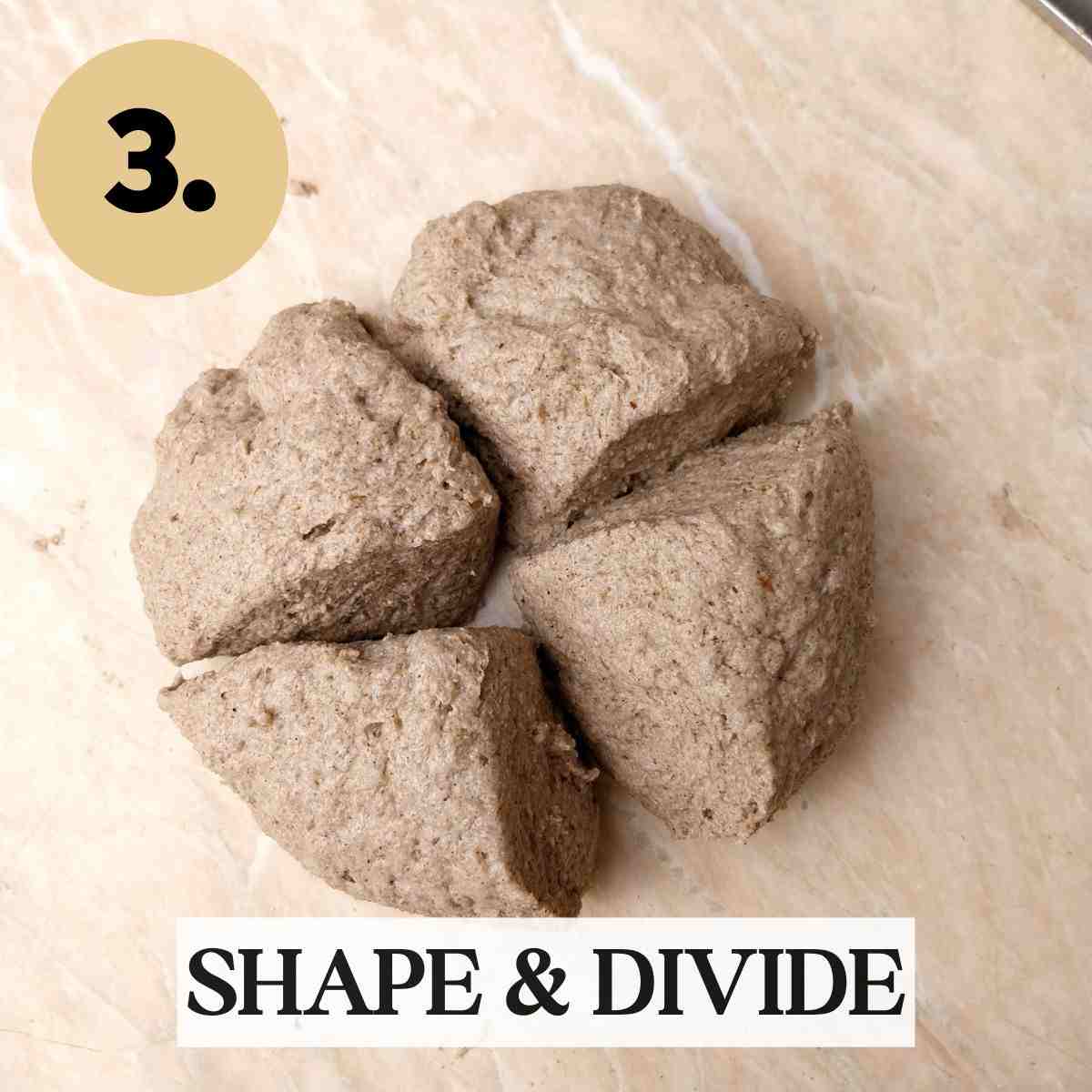
Step 3. Divide the dough into four equal pieces using a knife or bench scraper. Roll each piece into a smooth, tight ball, this helps make even, round rotis later.
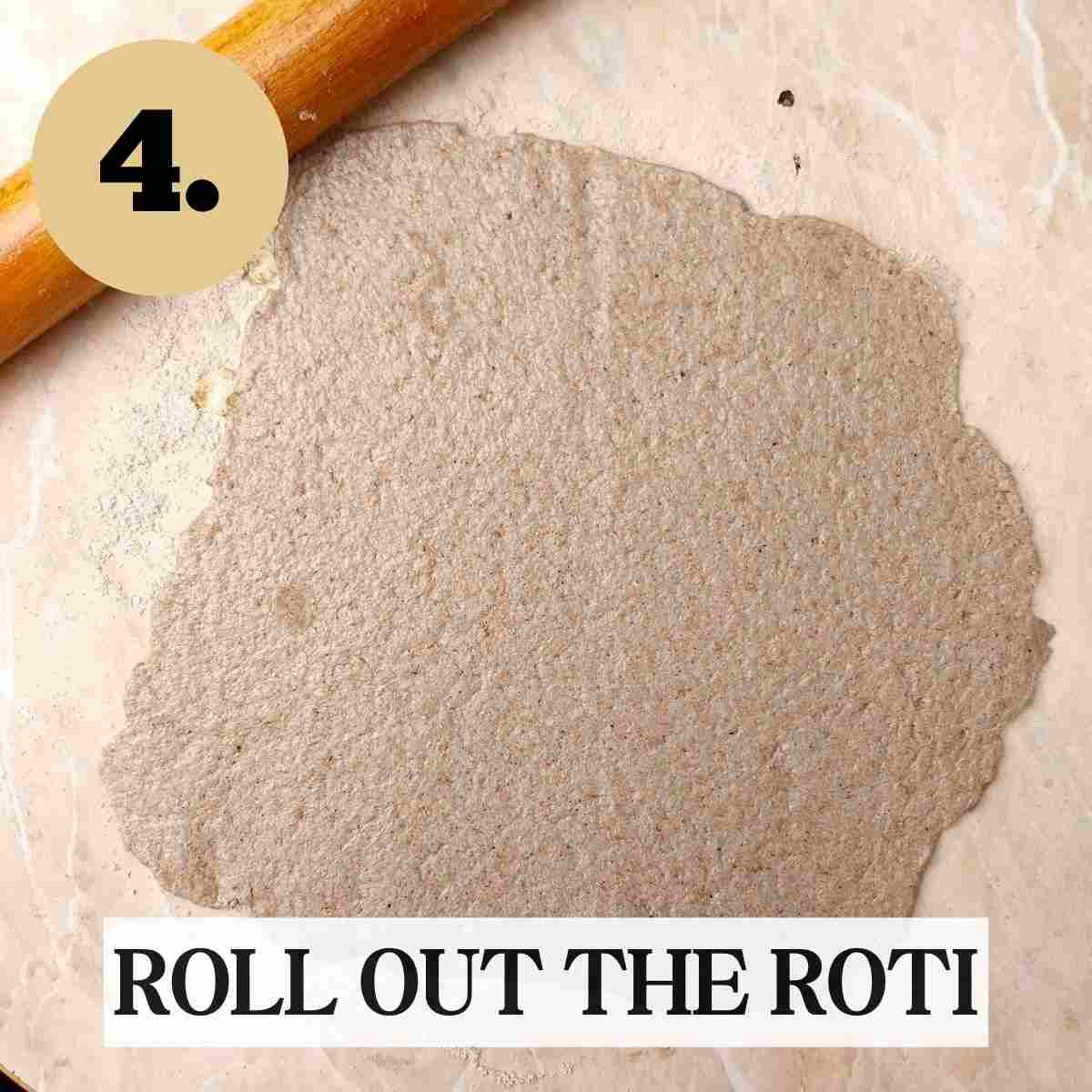
Step 4. Generously flour your surface. Take one dough ball and gently press it into a disk. Add a little olive oil or ghee to the dough top to help with rolling. Roll it out into a thin roti (about 20cm), but don't go too thin or it might tear. You can slide a metal offset spatula underneath the dough to loosen it and make sure it isn't sticking (totally optional, but handy).
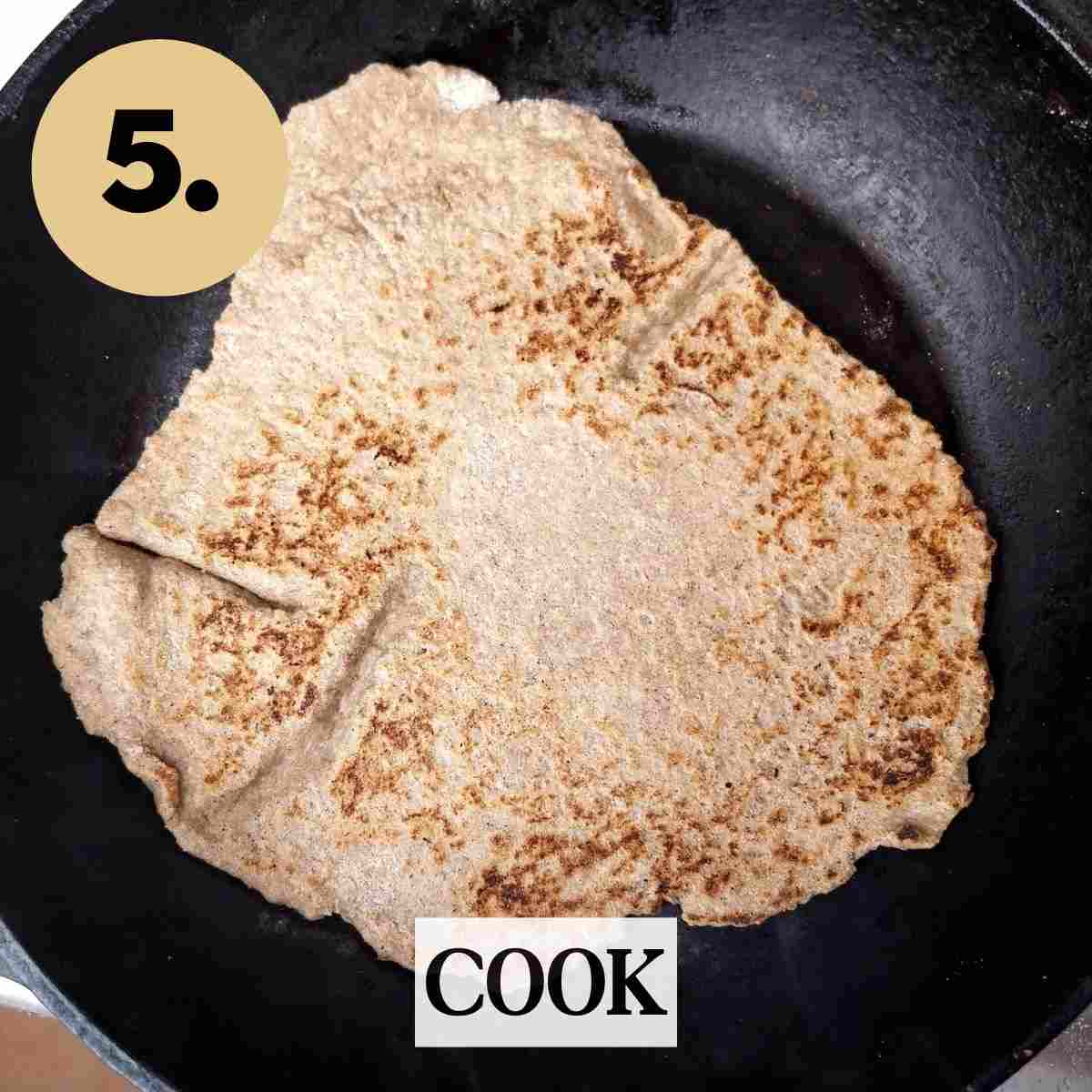
Step 5. Heat a dry flat pan, tawa, or skillet over medium-high heat. Carefully transfer your rolled-out ragi roti onto the hot pan using your hands and cook for about 2 minutes, or until bubbles start to appear. The roti won't puff up entirely, but it will create bubbles. Flip and cook the other side until golden brown spots form (another 1-2 minutes).
Once it's done, transfer your nachni roti to a plate and cover it with a clean kitchen towel to lock in the moisture. Repeat with the remaining dough balls.
Enjoy them warm with your favorite curry or use them as a wrap!
Expert tips
- Dough too wet? The dough is supposed to be very sticky, just like in this gluten-free sourdough bread. Flour the surface and use oil or ghee for rolling, but avoid adding extra flour to the dough.
- Dough too dry? It's unlikely for the dough to be dry, but if it is, simply add as much water as necessary until it's soft and sticky.
- Transfer with care: Slide a metal spatula under the roti dough to make sure it won't stick to the table, then gather it up with your hands and carefully transfer to a hot tawa or skillet.
- Keep them soft after cooking: Stack the cooked nachni rotis in a kitchen towel-lined container with the lid on. Steam keeps them pliable. For extra softness, brush them with warm water or ghee while still hot like you would gluten-free sourdough rolls.
Serving Ideas
- Classic: Coconut chutney, tomato chutney, rasam, or saaru.
- Modern: Wrap it up with hummus, avocado, grilled veggies, or serve with old-fashioned garden tomato soup.
- For kids: Cut into strips and serve with sweetened yogurt.

Common Questions
Keep ragi rotis in an air-tight container lined with a kitchen towel in the refrigerator to prevent molding for 1-2 days, just like buckwheat wraps. Freeze nachni rotis for up to 2-3 months and reheat in the microwave or on a tawa.
Totally. Pat it out by hand or use a tortilla press. Make sure to oil your tortilla press to prevent sticking.
Yes! Serve it with soft bananas or yogurt for more appeal.
Yes, you can skip the oil for rolling and simply flour the top of the dough to prevent sticking, like in these gluten-free sourdough flatbreads.
More Gluten-Free Recipes You Will Love



The BEST Ragi Roti
Ingredients
- 240 grams water
- 15 grams whole psyllium husk 13g if using powder
- 140 grams ragi flour
- ½ teaspoon salt
SAVE THIS RECIPE!💌
Instructions
- Pour the water into a medium mixing bowl and whisk in the psyllium husk. Let it sit for 2-3 minutes to form a thick, gel-like mixture.240 grams water, 15 grams whole psyllium husk
- Add the ragi flour and salt directly into the bowl with the psyllium gel. Mix the dough using a spatula, wooden spoon, or just dive in with your hands (my favorite method). Once it comes together, shape it into a ball and place it onto a lightly floured working surface.140 grams ragi flour, ½ tsp salt
- Divide the dough into four equal pieces using a knife or bench scraper. Roll each piece into a smooth, tight ball, this helps make even, round rotis later.
- Generously flour your surface. Take one dough ball and gently press it into a disk. Add a little olive oil or ghee to the dough top to help with rolling. Roll it out into a thin roti (about 20cm), but don't go too thin or it might tear. You can slide a metal offset spatula underneath the dough to loosen it and make sure it isn't sticking (totally optional, but handy).
- Heat a dry flat pan, tawa, or skillet over medium-high heat. Carefully transfer your rolled-out ragi roti onto the hot pan using your hands and cook for about 2 minutes, or until bubbles start to appear. The roti won't puff up entirely, but it will create bubbles. Flip and cook the other side until golden brown spots form (another 1-2 minutes).
- Once it's done, transfer your nachni roti to a plate and cover it with a clean kitchen towel to lock in the moisture. Repeat with the remaining dough balls.Enjoy them warm with your favorite curry or use them as a wrap!
Notes
- Dough too wet? The dough is supposed to be very sticky, just like in this gluten-free sourdough bread. Flour the surface and use oil or ghee for rolling, but avoid adding extra flour to the dough.
- Dough too dry? It's unlikely for the dough to be dry, but if it is, simply add as much water as necessary until it's soft and sticky.
- Transfer with care: Slide a metal spatula under the roti dough to make sure it won't stick to the table, then gather it up with your hands and carefully transfer to a hot tawa or skillet.
- Keep them soft after cooking: Stack the cooked nachni rotis in a kitchen towel-lined container with the lid on. Steam keeps them pliable. For extra softness, brush them with warm water or ghee while still hot like you would gluten-free sourdough rolls.

Natasha Levai says
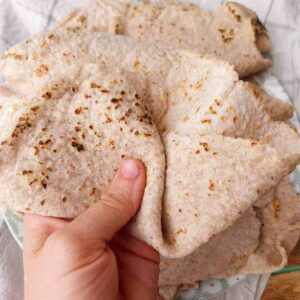
A great ragi roti recipe that creates perfectly soft and pliable rotis that can work as wraps!