
This easy and delicious Gluten-Free Corn Flour Bread comes together in under 3 hours, tastes as yeasty as regular bread, has no xanthan gum, and is naturally vegan and dairy-free! You won't know this bread is gluten-free, just like this reader-favorite teff bread.
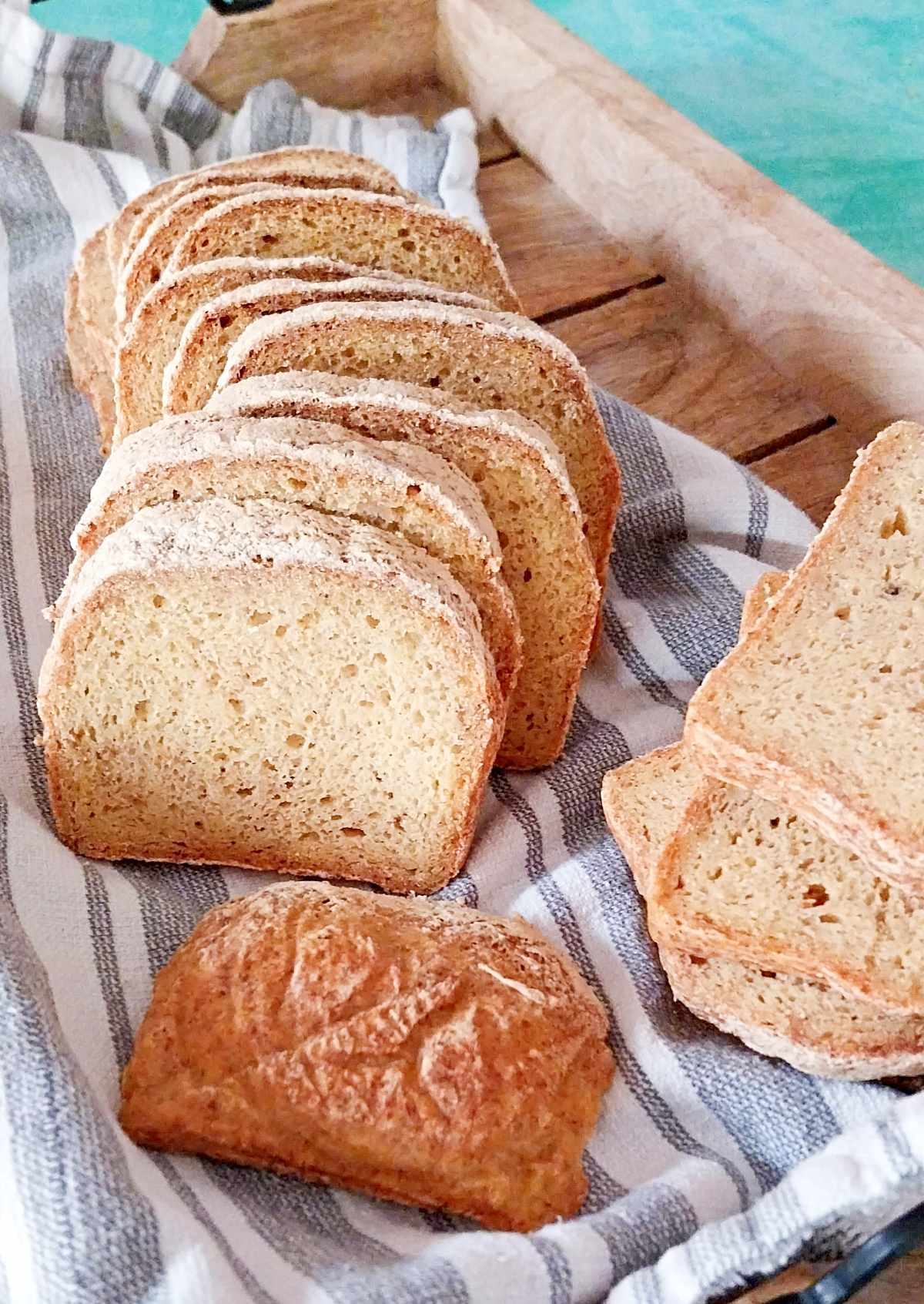
This corn flour recipe was inspired by my gluten-free sourdough cornbread. Only making a yeasted sandwich bread with corn flour requires an addition of starches to prevent it from being dense and gummy. See my potato vs. tapioca starch post to make the best choice for your maize flour bread!
Jump to:
Why You Will Love This Recipe:
- Naturally vegan, dairy-free, gum-free, and gluten-free, just like my popular millet bread recipe!
- Soft and yeasty, just like my artisan Dutch oven gluten-free bread, only with fewer ingredients.
- Holds together perfectly in sandwiches without crumbling, just like our top-rated gluten-free sourdough bread.
Can I Grind Cornmeal into Corn Flour at Home?
Yes, you can make corn flour at home by grinding cornmeal (maize meal) or dried corn kernels in a high-speed blender until it has the texture of fine powder. Sift homemade corn flour to get rid of the larger bits and use in baking!
Note that cornmeal and maize meal are the same thing, while polenta is cooked cornmeal and not suitable for use in baking.
Ingredients for Corn Flour Bread
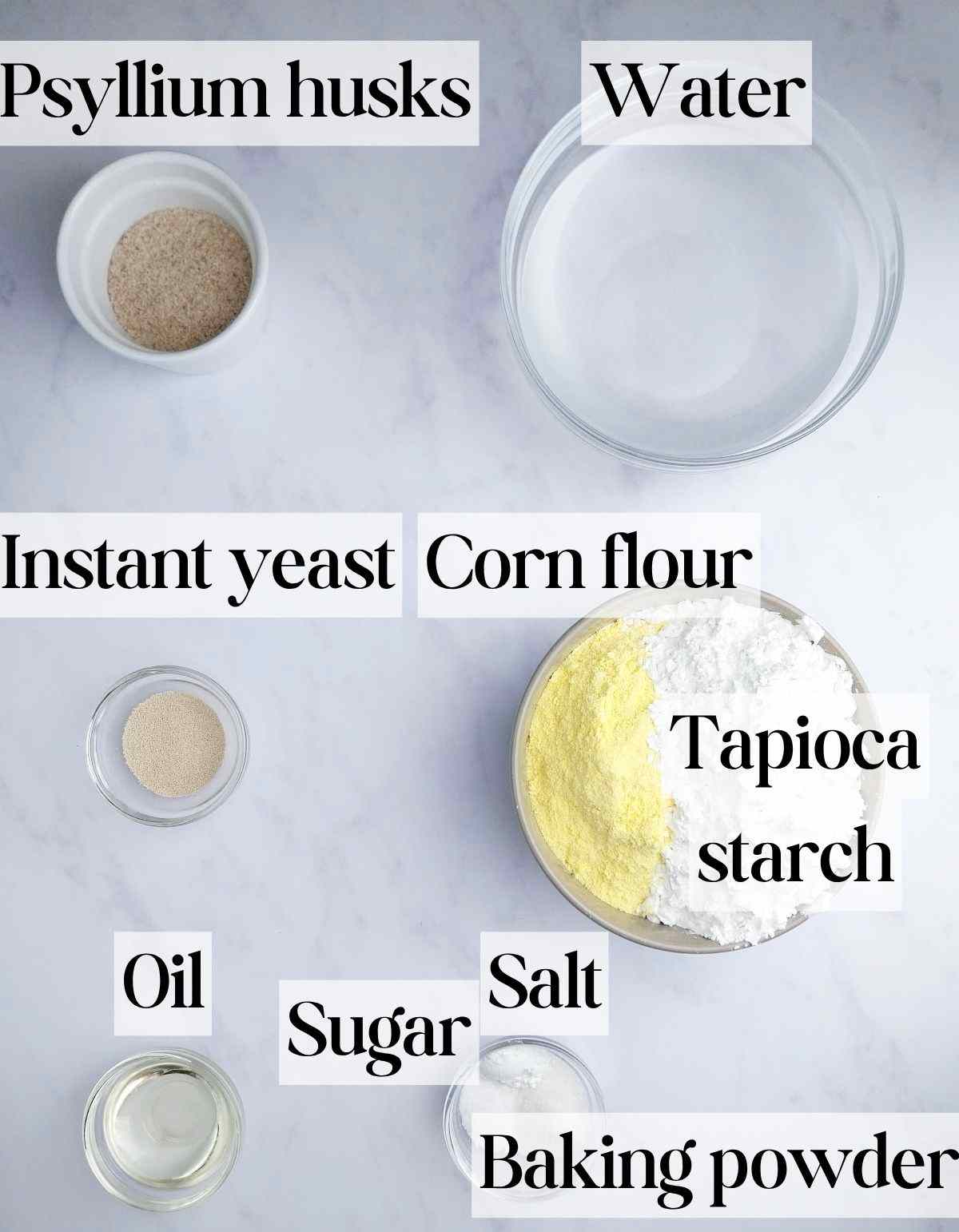
- Corn flour - note that it is different from cornstarch. To make cornstarch bread, see recipes designed with cornstarch. If you only have cornmeal, blend it in a high-speed blender until you get fine flour, then sift out the larger bits.
- Tapioca starch - allows for an open and soft crumb and an authentic bready texture.
- Psyllium husks - I highly recommend whole husks, although psyllium powder can be used instead.
See the recipe card for quantities.
Substitutions
- Tapioca starch - use cornstarch, potato starch, or arrowroot starch instead.
- Corn flour - cannot be substituted by other flour types or cornmeal in this recipe.
- Psyllium husks - this is the secret ingredient to this bread and cannot be substituted.
- Sugar - maple syrup or honey can be used instead; don't use artificial sweeteners.
How to Make Corn Flour Bread
See the recipe card for detailed instructions!

Step 1. Make psyllium gel by mixing psyllium husks and water.
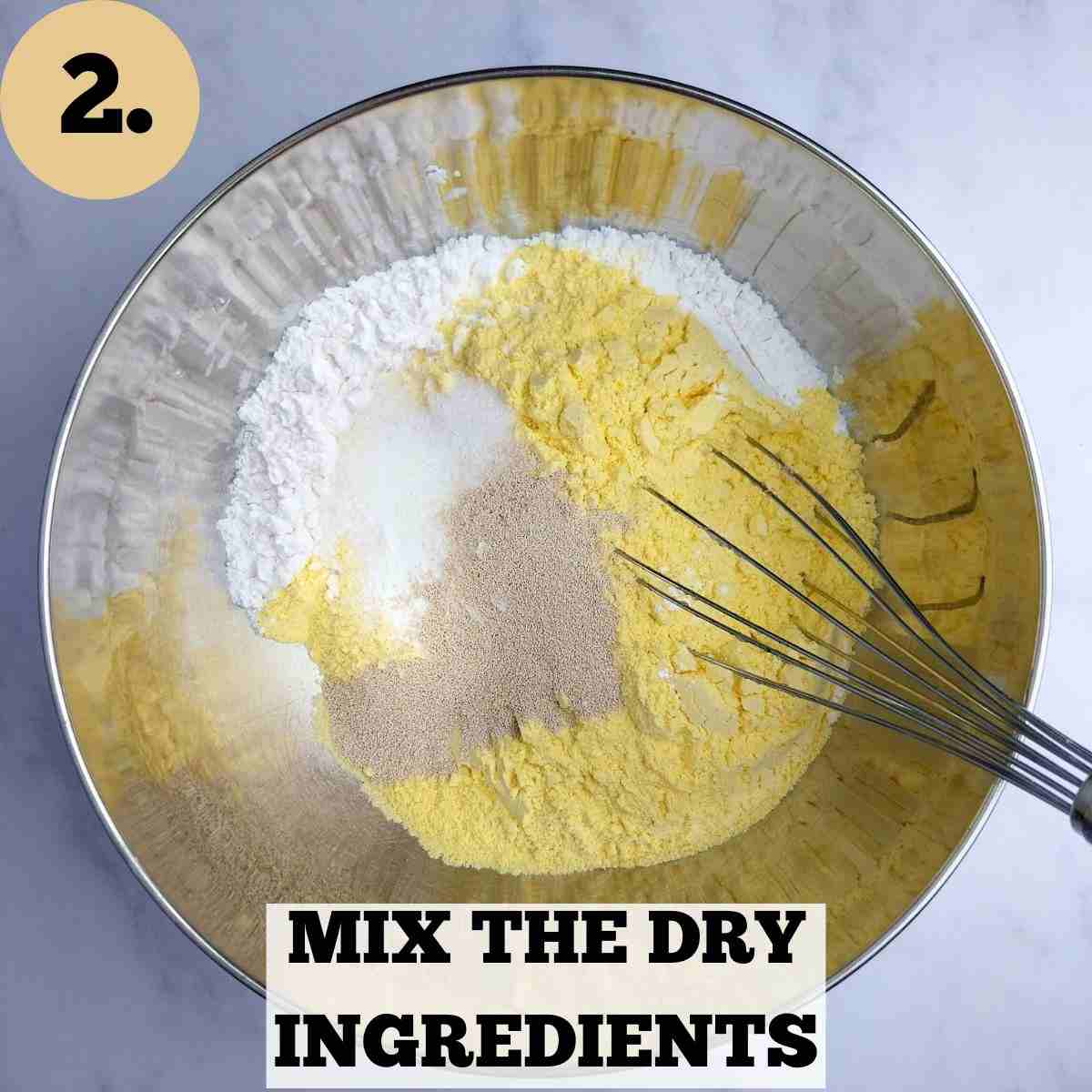
Step 2. Mix the dry ingredients.
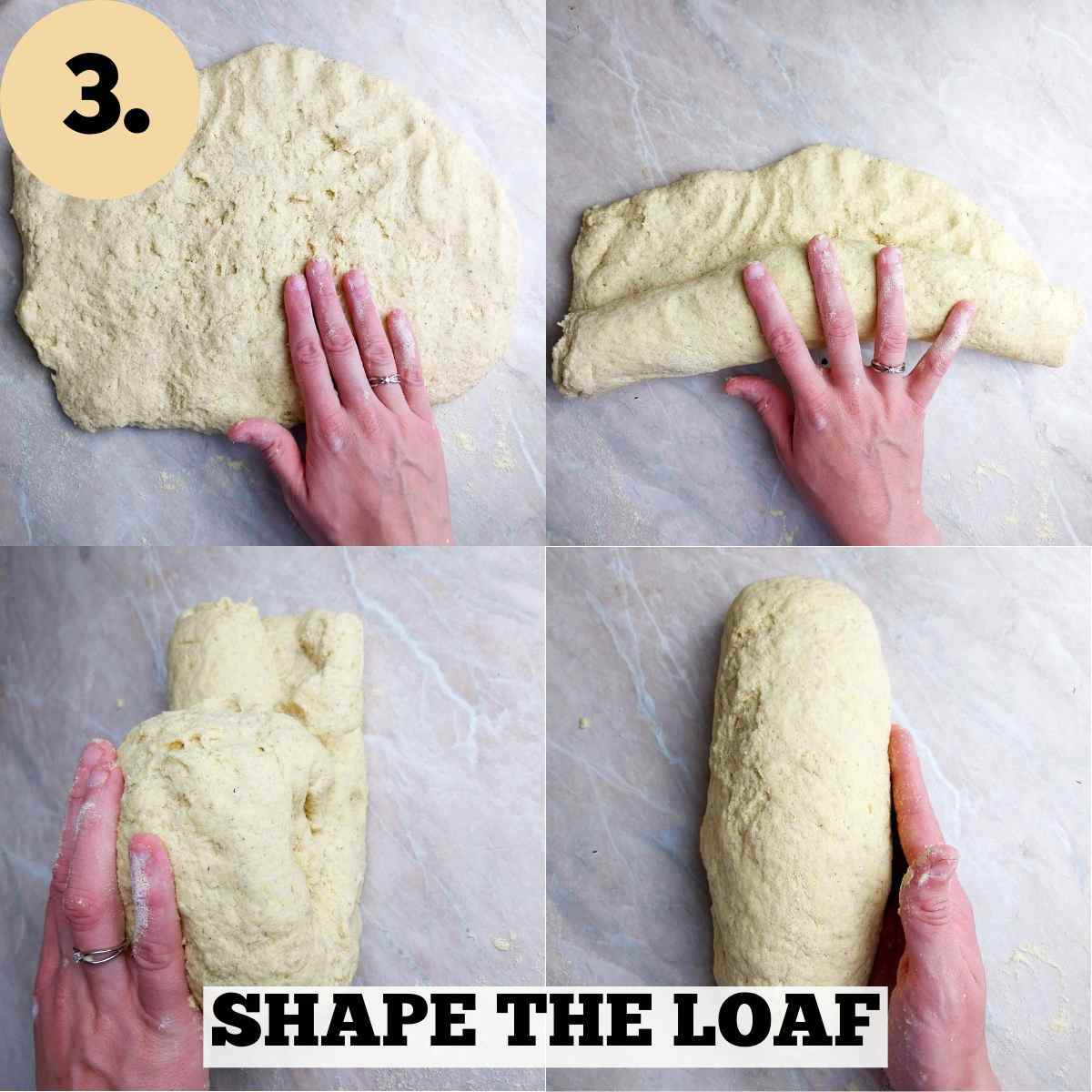
Step 3. Mix the dough by incorporating all of the ingredients with a mixer or a wooden spoon.
Shape the dough into a batard as shown in the pictures.
Place the corn flour dough in a standard 9x5-inch (23x12 cm) loaf pan lined with parchment paper. Gently press the top to flatten.
Don't use glass baking pans for they aren't as good at transferring heat which results in underbaked bread.
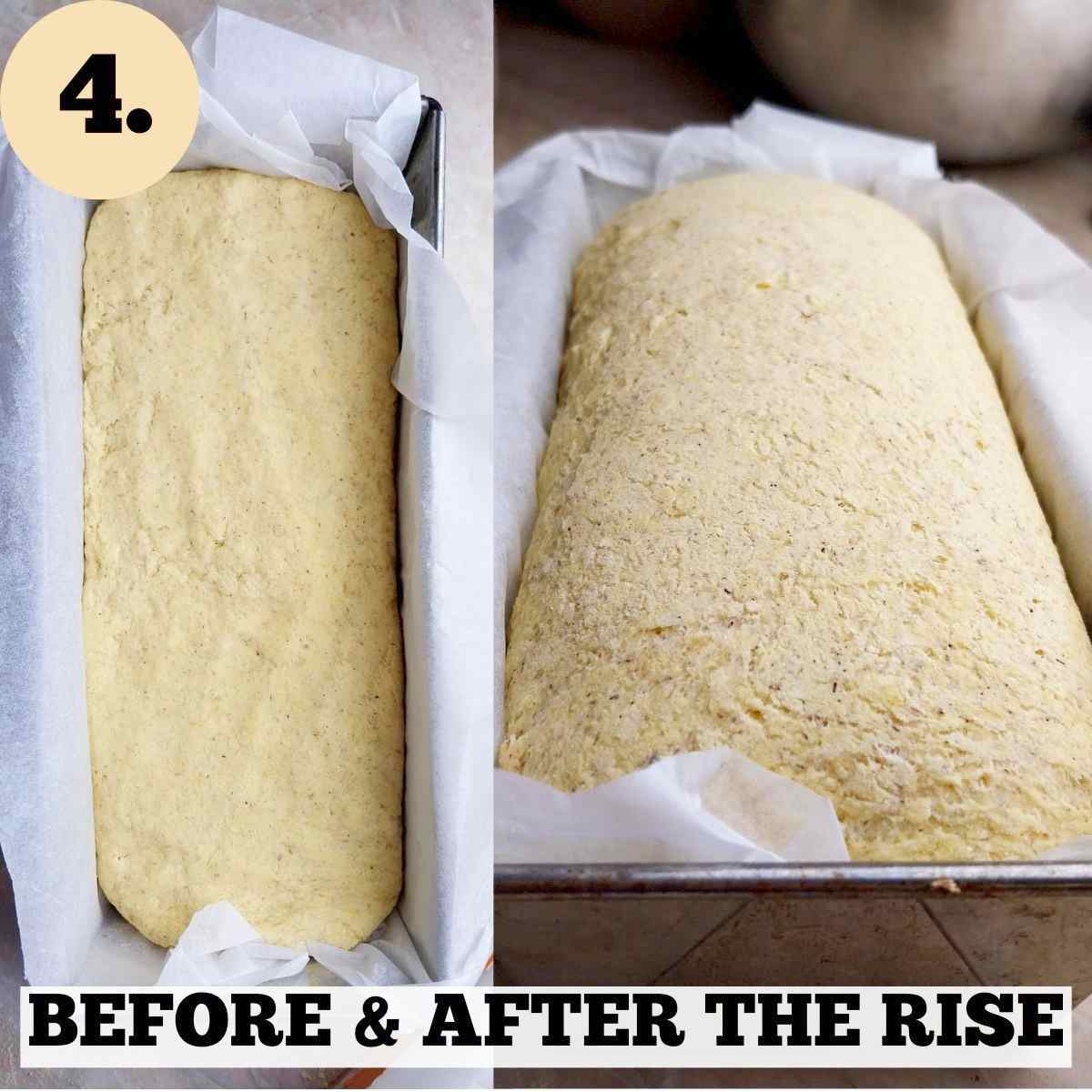
Step 4. Proof the dough until it doubles in size, then preheat the oven to 350°F/175C.
Bake uncovered for 1 hour, then cover the top with aluminum foil (shiny side up) and bake for an additional 30 minutes.
Once baked, transfer the loaf to a cooling rack and let it sit until no longer warm to the touch.
Use a serrated knife for cutting, and freeze the slices to keep the loaf fresh for longer. Enjoy!
Expert tips
- Use an oven thermometer to ensure the proofing and baking temperatures are correct.
- Mix the dough for 5-10 minutes to create a smoother texture and prevent the top from cracking.
- Don't use too much flour while shaping to prevent drying out the dough.
- Store the bread at room temperature in a bread box or a bag for up to 4 days and in the freezer for up to 3 months. To freeze, slice the loaf and place it into an air-tight freezer-friendly container. Microwave to defrost!
Common Questions
While yeast works with corn flour, it is best to mix the flour with starches (tapioca, arrowroot, potato, or even cornstarch) for a better rise. Brown rice bread might be a better choice if you need a starch-free yeasted recipe.
Corn flour doesn't have gluten, so it won't act the same as plain flour. You will need to use psyllium husks like in this buckwheat bread recipe to keep the soft and bready texture and prevent crumbling.
No, it is best to avoid precooked corn flour in this recipe due to the lack of natural bacteria present in raw corn flour. You wouldn't want to use precooked flour in a gluten-free sourdough starter either for the same reason.
It is possible, but the texture will be very dense and not as pleasant to eat. This maize flour bread uses part of tapioca starch to create a soft and airy crumb and an authentic bready texture. For starch-free bread, see my sorghum bread recipe.
More Gluten-Free Recipes You Will Love!
Looking for other recipes like this? Try these:

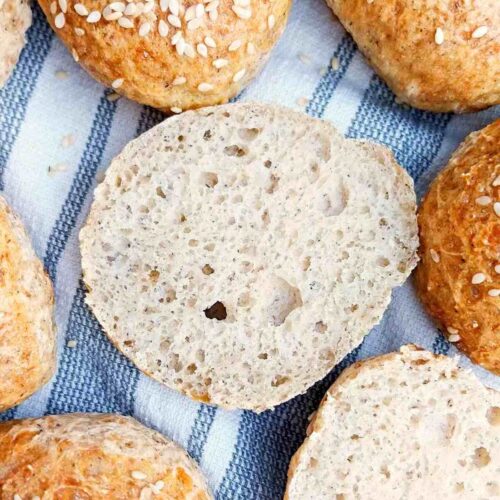

Corn Flour Bread
Ingredients
Wet Ingredients
- 30 grams whole psyllium husks or 28g of psyllium powder
- 520 grams water warm or room temp
- 30 grams any neutral oil I used sunflower oil
Dry Ingredients
- 200 grams tapioca starch or arrowroot starch/potato starch/cornstarch
- 300 grams corn flour NOT cornstarch/cornmeal/maize meal
- 12 grams salt
- 15 grams sugar or maple syrup/honey
- 1 teaspoon baking powder NOT baking soda
- 1 packet instant yeast if using active dry yeast, acitvate it prior to use
SAVE THIS RECIPE!💌
Instructions
- In a small bowl, whisk whole psyllium husks and warm or room-temperature water. Whisk right away to prevent clumping. Let the mixture sit for a couple of minutes until it thickens into a gel.30 grams whole psyllium husks, 520 grams water
- In a large mixing bowl, add all dry ingredients and whisk well to ensure they're evenly combined.200 grams tapioca starch, 300 grams corn flour, 12 grams salt, 15 grams sugar, 1 tsp baking powder, 1 packet instant yeast
- Add the psyllium gel and oil to the dry ingredients. Mix thoroughly using a wooden spoon, an electric mixer with dough hooks attached, or simply use your hands until all flour is incorporated and the dough is smooth.30 grams any neutral oil
- Turn the dough over onto a lightly floured working surface, flatten it out into a large rectangle, then roll it up from the longer side. Curl the dough up like a snail shell, then shape it into a batard.
- Place the corn flour dough in a standard 9x5-inch (23x12 cm) loaf pan lined with parchment paper. Gently press the top to flatten. Tip: Don't use glass baking pans for they aren't as good at transferring heat which results in underbaked bread.
- Place the pan in the oven and set it to 50°C (122°F). Allow the dough to rise until doubled in size, about 30 to 60 minutes. Once risen, increase the oven temperature to 175°C (350°F) with the loaf still inside and wait until it reaches the desired temperature before setting up the timer.
- Bake uncovered for 1 hour, then cover the top with aluminum foil (shiny side up) and bake for an additional 30 minutes.
- Once baked, take the bread out of the pan, remove the baking paper, and transfer the loaf onto a cooling rack until it is no longer warm to the touch (3-6 hours).Use a serrated knife for cutting, and freeze the slices to keep the loaf fresh for longer. Enjoy!
Notes
- Use an oven thermometer to ensure the proofing and baking temperatures are correct.
- Mix the dough for 5-10 minutes to create a smoother texture and prevent the top from cracking.
- Don't use too much flour while shaping to prevent drying out the dough.
- Store the bread at room temperature in a bread box or a bag for up to 4 days and in the freezer for up to 3 months. To freeze, slice the loaf and place it into an air-tight freezer-friendly container. Microwave to defrost!

Kate says
Can I make this with Maseca corn flour?
Helena Gamble says
So far so good. I actually used a bread machine, dough setting, for mixing. I proofed it in the oven as the recipe says, but my oven's lowest temp is 170 Degree F. What is the reason for baking it for 1h and 30m? I am now at the 50 minute baking mark and am just wondering if I am over baking it. I will then cover it and bake for 30min. I am nervous that I will over bake it.
I am looking forward to tasting it. Thank you so much.
Helena
Natasha Levai says
Hi Helena! You can bake for 1h 10m and see if the bread is thoroughly baked through at that point. I bake my breads for 1.5 h to make sure they don't end up wet on the inside, but some breads will turn out well with less baking. How did your loaf turn out?
Holly says
What would I do to turn this into sourdough? I have a millet starter that is very strong. Would I take a portion of the cornflour and liquids out and add my starter? How much would I take out and how much sourdough would I add? Thx!
Jackie says
Is this adaptable for a bread machine
Natasha Levai says
Hi Jackie! I haven't tried it in a bread machine but I am curious if it would work. Let me know if you try it!
Linn says
Does this recipe contain 449g carbohydrates as listed? It must be a misprint.
Natasha says
This is a very easy yet soft and bready recipe that holds together in sandwiches and tastes like real bread!
Virginia (Ginny( Burnham says
delicious taste, but the gel is thick and very hard to mix into dry ingredients. How long should I let psyllium and water thicken?
Natasha Levai says
Hi Virginia! You can mix the psyllium gel in sooner to prevent it from hardening too much.