
I am so excited to share this easy and soft Buckwheat Bread with Yeast! It calls for minimal ingredients and offers a great gluten-free bread experience. Perfect for serving with Ukrainian borscht! If you enjoy baking with naturally gluten-free flours, this pillowy soft corn flour bread recipe is also worth a try.

This hearty buckwheat flour bread is inspired by my popular millet bread. It's made with just one flour without added starches or blends. Buckwheat has a bold flavor, so for a milder option, try my brown rice bread recipe instead!
Jump to:
Why You Will Love This Recipe
- Only calls for 1 flour type just like my rice bread,
- A soft texture and a moist crumb like in the reader-favorite Dutch oven gluten-free bread,
- A hearty and earthy flavor of buckwheat makes this bread stand out from other recipes.
Ingredients for Buckwheat Bread
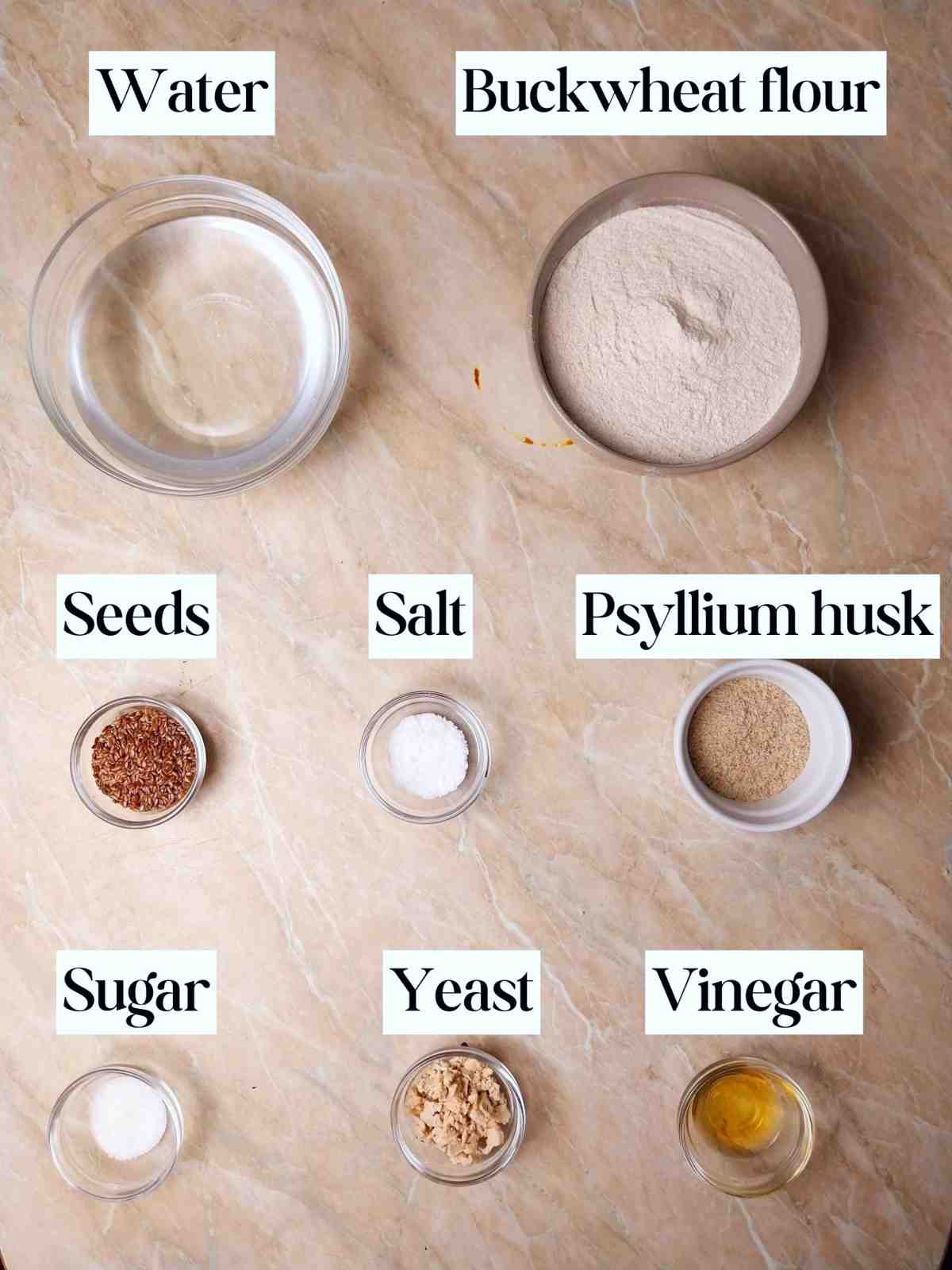
- Buckwheat flour - I recommend light buckwheat flour for a milder flavor. You can grind your own at home and use leftovers to make buckwheat banana pancakes.
- Whole psyllium husks - I recommend whole husks for the ease of use, although psyllium powder can be used as well.
- Vinegar - apple cider, white, or wine vinegar works great.
Substitutes
- Psyllium husk - I don't recommend substituting psyllium husk as there is no equal alternative to it in baking. If you can't have psyllium, check out my bread with Konjac!
How to Make Buckwheat Bread

Step 1. If using active dry yeast:
- Warm 150g of water in a microwave (not hot) and mix in the yeast with the recipe's sugar. Let it sit until frothy.
- Use the remaining water to make the psyllium gel: mix it with psyllium husks and apple cider vinegar.
- Let the mixture sit for a few minutes.
If using instant yeast, just add it directly to the dry ingredients-no activation needed!
Use all of the water, sugar, psyllium, and apple cider vinegar to make psyllium gel.
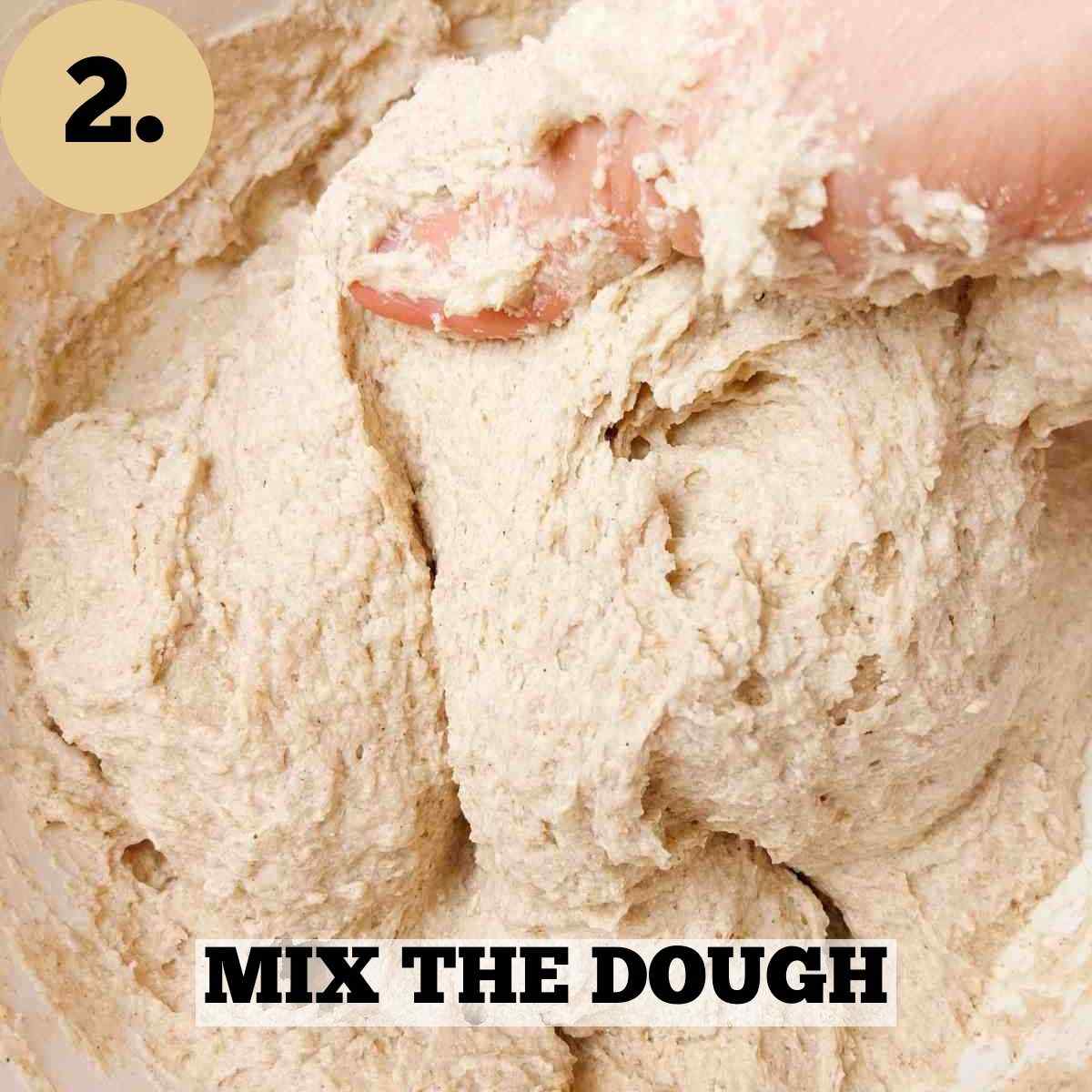
Step 2. Add all of the dry ingredients in a large mixing bowl and stir to combine.
Then, add psyllium gel and yeast to the bowl and mix with your hands, a wooden spoon, or an electric mixer until well combined.
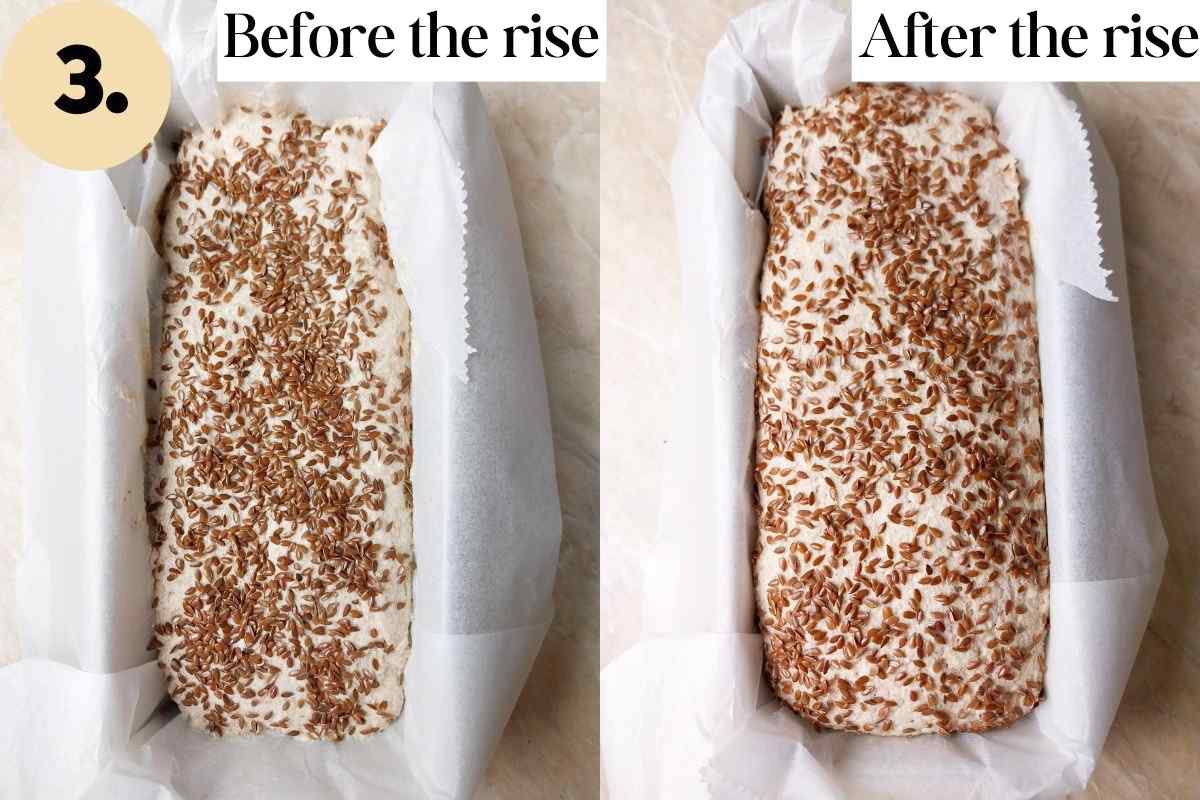
Step 3. Line and/or grease a 9x5 inch (22x12cm) metal baking pan and transfer the dough to it. Smooth the top out with a silicone spatula, top with seeds, then cover the dough with a kitchen towel and leave it to rise.
Place the buckwheat loaf in a warm draft-free area until it comes up to the pan's rim (about 1-1.5 hours). Don't let the dough rise beyond the pan to avoid it collapsing later on.
20 minutes before the bread is done proofing start preheating the oven to 350F/175C and move the oven rack to the middle position. Place an oven-safe dish with water at the bottom of the oven to create some extra steam.
Bake buckwheat bread for 50 minutes, then take it out of the pan, remove the baking paper, and bake on the oven rack for another 30 minutes to let the sides crisp up.
Transfer the loaf to the cooling rack until no longer warm to the touch.
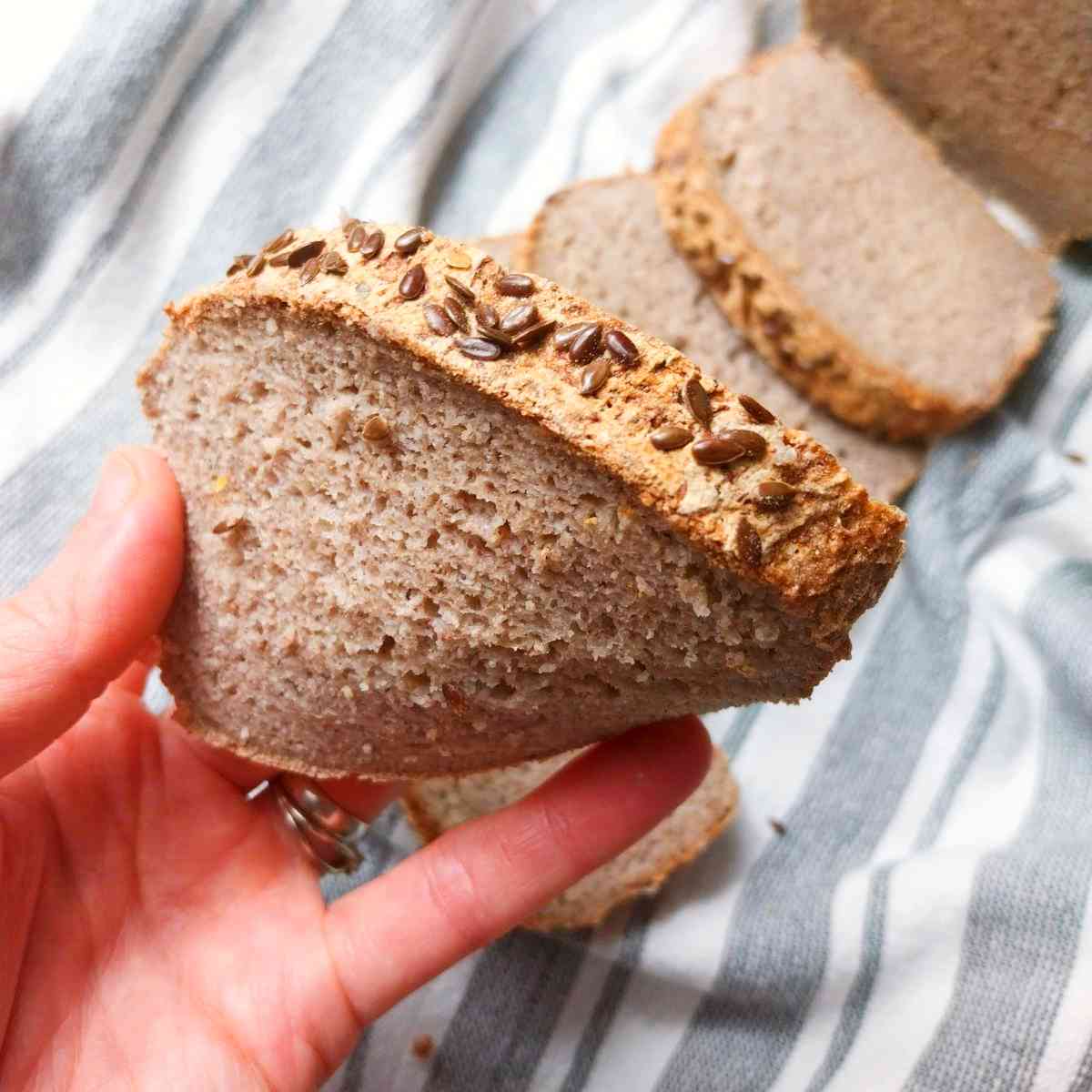
Slice and enjoy!
Expert Tips
- Don't let the dough rise over the rims of the pan or buckwheat bread will deflate.
- Let the bread cool on a cooling rack to prevent the bottom from getting soggy.
- Use a kitchen scale to ensure the best results!
Troubleshooting & FAQs
Overproofing can create a gummy layer on the bottom of the loaf and create a hole between the top crust and the crumb. If your loaf looks fine but is gummy, reduce the amount of water in the recipe.
You can do a 2-rise proofing if you prefer. For that, leave the dough in the mixing bowl covered with a kitchen towel for about 1 hour. Then, deflate the dough, transfer it to the prepared baking tin, and let it rise a second time.
No, I don't recommend using whole buckwheat groats instead of flour. You can grind the groats into flour by using a food processor or a high-speed blender and use leftover flour for buckwheat banana muffins.
Buckwheat adds moisture and deep earthy and nutty flavors to bread. Buckwheat is high in carbs, so it works great with yeast! I especially like this yeasty buckwheat focaccia recipe.
Storage and freezing
- Store buckwheat bread in a bread box or wrapped in a kitchen towel at room temperature for up to 1 week.
- To freeze, I recommend slicing the loaf first. Arrange the slices on a tray or a piece of parchment paper and let it freeze for about 30 minutes. Then, transfer the slices to a ziplock bag or a freezing container. Keep the bread in the freezer for up to 3 months!
- To defrost, you can either let it thaw at room temperature or simply pop the slices into a toaster or a microwave.
More Buckwheat Recipes You Will Love!


Get my new
Gluten-Free Bread Recipes eBook
The top 26 recipes of 2026! Includes a bonus conversion chart for gluten-free flour.
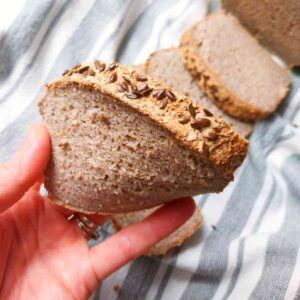
100% Buckwheat Bread (Gluten-Free, Vegan)
Ingredients
- 25 grams whole psyllium husks, I don't recommend using psyllium husk powder, for more details read my psyllium guide
- 560 grams water
- 7 grams instant yeast
- 12 grams apple cider vinegar, optional, might add acidic flavor
- 2 teaspoon sugar, for the yeast
- 400 grams buckwheat flour
- 10-12 grams salt
Topping
- seeds or nuts of choice, linseeds, sunflower seeds, poppy seeds, etc.
SAVE THIS RECIPE!💌
Instructions
Mix the dough
- If you are using active dry yeast, you will need to activate it in warm water. In that case, take part of the water called for in the recipe and use it to activate the yeast.
- Add psyllium husk and water to a medium-size bowl and whisk to combine.
- Add apple cider vinegar and sugar to the psyllium mix and set the bowl aside.
- Add 400g of buckwheat flour, 10-12g of salt, and yeast (if you are using fresh or instant yeast you don't need to activate it in water). Stir to combine.
- Once psyllium gel has formed (1-2 minutes), add it to the bowl with the dry ingredients and mix by hand. You can also use an electric mixer if you prefer.The dough will be wet and sticky but that is ok!
Proofing
- Prepare the baking bread pan by greasing it and/or lining it with parchment paper. Greasing the pan first allows for the paper to stick to it better.
- Transfer the dough to the bread tin with the help of a wet silicone spatula. Smooth the dough with the spatula and add the seeds to the top.
- Cover the bread pan with a kitchen towel and place it in a draft-free area to proof. Proofing will take anywhere from 30-60 minutes, depending on the temperature in your house!
Baking
- About 20 minutes before the bread is done proofing, start preheating the oven to 350F/175C. Place a dish with water in the bottom of the oven to create extra steam.
- Let the bread rise until it barely reaches the top of the baking tin, then transfer it to a preheated oven and bake for 1.5 hours.
- Transfer the bread to a cooling rack and wait until it is no longer warm to the touch. Slice and enjoy!
Notes
- Make sure your bread doesn't rise too high or it will deflate after baking.
- Take the bread out of the bread pan 5-10 minutes after it is done baking, don't leave it in the pan or it will become wet and soggy on the bottom.
- Weigh ingredients using a kitchen scale instead of using measuring cups.


Sandy says
hello, I’ve tried your Buckwheat bread recipe today and I loved it. I’ve been searching for a while and came across your website, I’m very thankful. Cheers
Dolores says
Afternoon
What can I use in place of psyllium husk
Natasha Levai says
Hi Dolores! Unfortunately, there is no good substitute for psyllium husk in this recipe.
Sandy says
I think you can Chia seeds
Tim says
Hi Natasha, I have tried to make this recipe a few times with instant yeast, but it's just won't rise! I left it for 2.5hrs at over 20 deg C and nothing happened! I've tried adding extra water as the recipe amount seems very dry, but even then - no rise. I know the yeast is active since it makes normal bread just fine. What am I doing wrong? Could I be over-mixing it (since I've been mixing in a food mixer)? Any other tips?
Natasha Levai says
Hi Tim! Maybe try placing the bread into the oven with the light on (or you can even warm it up to 50C) and see if that makes any difference. If that doesn't help, try making the loaf smaller (bake 1/2 of the recipe for example instead of the whole one). I wonder why the consistency turns out dry, maybe it has to do with the flour differences. Are you using dark brown buckwheat flour or is it more gray in color?
Alexandra Robu says
Hello,
Coud you please write back the dimensions of the baking tin? Or which is your baking tin of choice? You say 22X12cm, but what about the height? This is important for proofing. Thank you,
Alexandra
Marjory K trinen says
Hello! I am really looking forward to trying this recipe. I have a buckwheat and brown rice sourdough starter. Would you be able to tell me how to incorporate that into this recipe?
Natasha Levai says
Hi Marjory! It would need some recipe testing to tell you for sure what amount and hydration of starter you can add. If you add too much, the bread might turn out dense and gummy 😐
Amina says
Great recipe! made this tonight and whole family including little kids loved it! I did add about half a cup of cornstarch and a little extra sugar and yeast. Had a great rise and crumb with crispy edges
cooked for 1.5 hours
will be adding this to our cooking rotation. thank you!
Cathy says
I love your Dutch oven breads. Is there any way I can make the buckwheat bread in my Dutch oven?
Natasha Levai says
Hi Cathy! I think the dough for buckwheat bread is a bit too liquid to hold up in a Dutch oven. If you reduce the liquids, you will be able to shape it for a Dutch oven but the crumb might be denser and dryer!
Laurie MacDonald says
Thank you so much, Natasha, for developing this great, reliable recipe. I have made it a few times already with chia seed or flaxseed as a substitute for the psyllium and it comes out fine. I appreciate the use of grams in this recipe because it gives a consistent result each time I make it. When I go to search for other buckwheat bread recipes, I keep coming back to this one. It’s the best 100% buckwheat bread! (The other recipes have added flours that I do not want to use.) It also slices well in my Oliver industrial bread slicer once cooled completely. I keep the sliced loaf in the refrigerator in a plastic bag for about a week, if it lasts that long. Lol! I give this recipe an easy five stars. (It would give it ten stars if possible.). Thanks again for sharing it with us. I eat this bread frequently. It reminds me that Jesus is the “bread of life”. I can’t live without Him!
Natasha Levai says
Thank you so much Laurie for your comment! It brings me joy reading it. Jesus is the bread of life!
Virginia BrandtCalderon says
I love this recipe and have made it a few times now. It always turns out great and I have a little kitchen scale so I do my measurements in grams. My only question is why does your bread look so light in the picture? I am using the same Bob's Redmills buckwheat but my is super dark and hearty. I would love to try for a lighter bread like yours appears to be. What would I do differently?
Natasha Levai says
Hi Virginia! Bob's Red Mill buckwheat flour is whole grain while I am using light buckwheat flour. Here in Europe light buckwheat flour is most common while on Amazon I only could find whole grain type! If you can find light buckwheat flour then you can make the same kind of bread you see in the pictures. 🙂
Miry says
could I use dry yeast? you think one packet? thanks
Natasha Levai says
Hi Miry! Yes, one packet (7-8g sounds good), just make sure to activate dry yeast in some warm water from the recipe before adding it to the dough.
Irene says
Hi Natasha,
I have a couple of queries - should one use warm water to help the yeast work?
And I a wondering why my bread tasted rather yeasty even although I measured everything to the gram!
Natasha Levai says
Hi Irene! You can use warm water, it will help some! I am not sure what you mean by yeasty. Buckwheat has a specific flavor not everyone likes, maybe that is what you are referring to?
Anjali says
Natasha, 25g of psyllium is about 1/3 cup, not 1.5 tbsp..do I go by weight or volume measure? Also for the other items. thanks
Natasha Levai says
Hi Anjali! I am sorry if there is a mistake, I will review and edit as necessary. It is better to go by gram measurements as this is what I used when making this recipe!
Selena Clarke says
Can I use the Sorghum sourdough stater with buckwheat flour?
Natasha Levai says
Yes!
Natalia says
I will be using instant yeast so can I omit the sugar? I have seen other recipes using buckwheat flour that add 2 TBSP of oil at the end of the mixing before shaping and proofing. Is there any reason to do this or not in this recipe?
Louisette says
I would be so grateful if you would list the ingredients in teaspoons, tablespoons or cups. I want to try your recipe but I can’t deal with grams.
Thank you. Looking forward to trying your bread.
Natasha Levai says
Thank you for your feedback! I will work on that. It is best to use a scale when it comes to gluten-free flour but I will try and make correct measurements in cups and spoons.
Naomi says
I made this last week and it was way too salty. I'm going to try with 1 teaspoon salt tonight. other than that it turned out well, quite heavy but still soft. So excited to eat bread again.
Hlen says
Hi …. I’m keen to try this but wondering how it ends up with 52 grams of sugar? Just found your site and it looks wonderful ,,,, thank you… glen
Natasha Levai says
Hi Hlen! I am not sure where you see the 52 grams of sugar, the recipe calls for up to 20g. 🙂
Glen says
Hi Natasha , thanks for reply and I mis-types my name, it’s glen! The 52.6 grams appears in the nutrition info at the bottom of the recipe?….. Glen 🤔
Natasha Levai says
Oh, you are right! Something went wrong there 😀 I just fixed it!
Glen says
Ah that makes more sense…..thanks Natasha! I have to really watch sugar intake…..😊