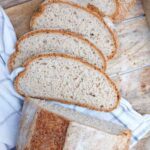
Gluten-Free Dutch Oven Bread
This bread is soft, fluffy, and has a rich flavor!
Servings: 12 slices
Calories: 170kcal
Cost: 5
Equipment
Ingredients
Psyllium Gel
- 20 grams whole psyllium husks use 18g if using powder
- 260 grams water warm or room temperature
Dry Ingredients
- 130 grams tapioca starch or arrowroot starch
- 100 grams potato starch or cornstarch
- 170 grams sorghum flour or brown rice flour
- 15 grams sugar or honey or maple syrup
- 7 grams instant yeast if using active dry yeast, activate it with some of the water or milk from the recipe
- 7 grams xanthan gum or guar gum
- 8 grams baking powder don't use baking soda
- 12 grams sea salt
Wet Ingredients
- 100 grams milk use plant-based milk for dairy-free
- 2 eggs or use 2 flax eggs instead (10g of flaxseed powder mixed with 110g of water and left to sit for 10 min)
- 30 grams sunflower oil or any other vegetable or seed oil
Instructions
- Add water and psyllium husk to a medium-sized bowl and whisk to incorporate.Set the bowl aside to let the psyllium gel form (2 min).20 grams whole psyllium husks, 260 grams water
- In a large mixing bowl combine all of the dry ingredients including sugar and whisk thoroughly to incorporate.130 grams tapioca starch, 100 grams potato starch, 170 grams sorghum flour, 15 grams sugar, 7 grams instant yeast, 7 grams xanthan gum, 8 grams baking powder, 12 grams sea salt
- Finally, add all the wet and dry ingredients along with psyllium gel and mix using an electric mixer with dough hooks.100 grams milk, 2 eggs, 30 grams sunflower oil
- I recommend mixing for at least 5 minutes to ensure a smoother dough.Alternatively, you can mix with hands or a wooden spoon but the loaf might turn out less smooth on the top.The dough will be very sticky but don't add any extra flour to it!
- Turn the dough onto a floured working surface and shape into a ball. Grease your hands with some oil to prevent sticking or use extra flour for dusting.I like my bread in a batard shape better but you can bake it as a boule, too.Dust a banneton basket with flour or use a mixing bowl lined with a dusted kitchen towel.Turn the dough inside down into the basket/bowl and press it in to create a flat surface. Cover the dough and leave to proof for 1-1.5 hours. The dough will puff up but won't double in size.
- I recommend proofing at about 75F/24C for the best results. Alternatively, you can place the dough in the oven with the light on.
- About 40 minutes into proofing, start preheating the oven to 450F/230C with the Dutch oven inside.
- Once the loaf is done proofing, carefully turn it over onto a piece of parchment paper and score. Scoring means cutting the top of the dough with a sharp razor to create a pattern and aid the oven spring.
- Then, gently lower the parchment with the loaf into a preheated Dutch oven, close the lid, and transfer it to the oven. Bake for 40 minutes with the lid on, then take the bread out of the Dutch oven, lower the temperature to 350F/175C, and continue baking on the oven rack for 30 minutes.Let your gluten-free Dutch oven bread cool completely before slicing into it to prevent it from collapsing and avoid gumminess. Enjoy!
Notes
Storage
-
- Keep this bread at room temperature for up to 3-4 days. It is best to store this loaf in a bread box or bag to prevent it from going stale.
-
- Freeze the slices to keep the bread fresh for longer. Wait for the bread to cool, then slice it. Transfer the slices into a freezer-friendly bag or container and keep for up to 3 months.
-
- To defrost, take out a piece or two and place them into a microwave for a couple minutes.
-
- Don't add extra flour to the dough even if it is sticky.
-
- If at all possible, use a digital kitchen scale to measure the ingredients!
-
- Toast the slices if they come out slightly wet on the inside.
Nutrition
Serving: 1slice | Calories: 170kcal | Carbohydrates: 31g | Protein: 3g | Fat: 4g | Saturated Fat: 1g | Polyunsaturated Fat: 0.4g | Monounsaturated Fat: 3g | Trans Fat: 0.003g | Cholesterol: 28mg | Sodium: 495mg | Potassium: 160mg | Fiber: 3g | Sugar: 2g | Vitamin A: 53IU | Vitamin C: 0.3mg | Vitamin D: 0.2µg | Calcium: 67mg | Iron: 1mg
