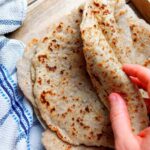
Easy Soft Buckwheat Flatbread
These buckwheat flatbreads are so soft, your friends won't tell the difference from the regular versino!
Servings: 8 flatbreads
Calories: 198kcal
Cost: 5
Ingredients
- 360 grams (1½ cups) water
- 20 grams (3 tbsp) whole psyllium husks
- 1 tablespoon sugar, optional.
- 360 grams (2⅓ cups) buckwheat flour, light or dark.
- 2 teaspoon salt
- 2 tsp baking powder
- 80 grams (⅓ cup) Greek yogurt or sour cream, plant-based version can be used instead
- 25 grams (2 tbsp) olive oil, or any other vegetable or seed oil.
Instructions
- Add psyllium husk, water, and sugar to a medium-sized bowl and whisk to prevent clumps. Set the bowl aside for a couple minutes.
- Then, add all of the dry ingredients to a large mixing bowl and stir to incorporate.
- Finally, add psyllium gel, yogurt, and olive oil to the bowl with the dry ingredients and mix the dough.You can mix by hand, with a wooden spoon, or with an electric mixer using dough hooks. The dough will be sticky, but avoid the urge to add more flour!
- Once the dough is ready, turn it over onto a lightly floured working surface and flatten it into a large disc.Then, fold each side of the dough onto the middle as you see in the pictures, flip the dough, and shape it into a ball.
- Divide the dough ball into eight equal parts using a bench scraper, a knife, or a metal spatula.Shape each piece into a small ball. If the dough is too sticky, simply dust the surface of the dough with some flour.
- Finally, take each piece of the dough and roll them out into a flatbread about 8in/21cm in diameter.Tip! Add oil to the surface of the dough when rolling it out to prevent sticking. Adding flour will dry out the dough while adding oil will only enrich it.I don't recommend stacking raw buckwheat flatbreads on top of each other as they might stick.Instead, roll them out right before transferring them onto a frying pan.
- Preheat a cast iron or a non-stick pan over medium heat. The pan is ready when a drop of water sizzles on it.Don't add any oil or grease to the pan! Simply transfer the rolled-out dough to the preheated pan and fry for 2-3 minutes on each side. The dough should have little bubbles and brown spots when cooked properly. Brush the hot flatbreads with some melted butter right as they come out of the pan. Cook the rest of the dough and stack buckwheat flatbreads on top of each other on a plate. Cover with a kitchen towel and enjoy!
Notes
Storage
Store the flatbreads at room temperature for a couple days or in the refrigerator for up to a week.
Note, that flatbreads will get drier and harder in the fridge, so I recommend freezing them if you aren't planning on eating them within a couple of days.
To freeze, place pieces of parchment paper in between the flatbreads and place them into an air-tight zip-lock bag or a freezer-safe container and keep for up to 3 months.
To defrost, simply place buckwheat flatbreads into the microwave for a minute or two and brush with some more butter!
Tips
-
- Flatbreads breaking when I transfer them to the pan - you can try rolling them out thicker to prevent them from breaking. Try to hold the entire dough in your hands as you transfer to avoid it tearing by being pulled down by its weight.
-
- Flatbreads are too dry - try cooking them for less time. If they are hard after a few days in the fridge, freeze them the next time to keep them fresh and soft.
Nutrition
Serving: 1flatbread | Calories: 198kcal | Carbohydrates: 35.9g | Protein: 6.7g | Fat: 4.5g | Saturated Fat: 0.9g | Cholesterol: 1mg | Sodium: 544mg | Potassium: 375mg | Fiber: 6.3g | Sugar: 2.8g | Calcium: 72mg | Iron: 2mg
